
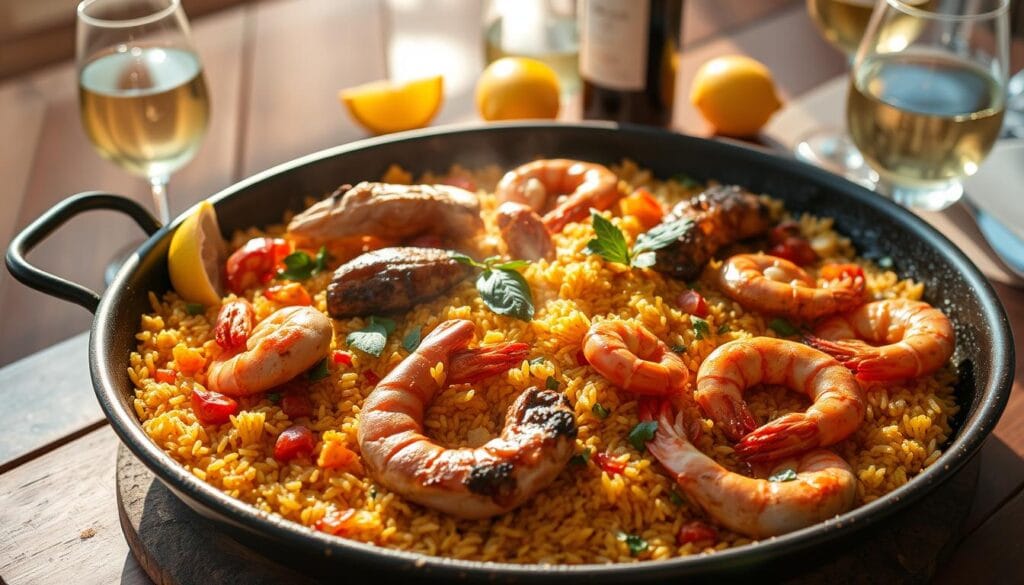
Imagine the warmth of Spanish culture and cuisine in your own home. Paella Valenciana, a classic dish from Valencia, brings Spain to your table.
This Spanish paella recipe is a must-try for Mediterranean cuisine lovers. It lets you recreate the authentic taste of Spain.
With traditional ingredients and techniques, you can bring Spain to your table. This paella valenciana recipe is a great way to experience Spanish cuisine’s authentic flavors.
Table of Contents
The Rich History of Paella Valenciana
Paella Valenciana started in the 19th century in Valencia’s rice fields. It has become a cherished dish. The name “paella” comes from the Valencian Catalan word for pan, used for cooking.
Origins in Valencia, Spain
Paella Valenciana was born in Valencia, Spain’s rice fields. Farmers and laborers cooked it with rice, veggies, and meats like rabbit and chicken. This recipe was simple, filling, and fit the local farming life.
Evolution from Humble Dish to National Icon
Paella Valenciana grew from a local dish to a national symbol of Spanish food. As it spread, new versions came, but the true Valencian paella stayed the same. Now, it’s a key part of Spanish food culture, loved in Valencia and beyond.
What Makes an Authentic Paella Valenciana
To understand what makes Paella Valenciana authentic, we need to look at its traditional ingredients and its place in the region. This dish is known for its specific ingredients and traditional cooking ways.
Traditional Ingredients
For a true Paella Valenciana, you must use bomba rice. It’s the best because it holds a lot of liquid but stays firm. You also need rabbit, chicken, vegetables, and saffron for its unique taste and color.
| Ingredient | Importance |
|---|---|
| Bomba Rice | Essential for its liquid-absorbing capability |
| Rabbit and Chicken | Traditional proteins that add flavor |
| Saffron | Gives Paella its characteristic color and flavor |
Common Misconceptions
Many think Paella Valenciana should have seafood, but it’s actually made with rabbit and chicken. Also, not just any rice will do; bomba rice is essential for a real experience.
“Paella is not just a dish, it’s a cultural icon that represents the heart of Spanish cuisine, particularly from the Valencia region.”
Regional Authenticity
The true essence of Paella Valenciana comes from Valencia, Spain. It’s a recipe that has been passed down through generations. To make it authentic, use local ingredients and traditional cooking methods.
Essential Equipment for Perfect Paella
To make a true Paella Valenciana, you need the right tools. This dish from Valencia needs special equipment for the best taste and texture.
The Paella Pan
The key tool is the Paella pan. It’s made of carbon steel and is shallow and wide. This shape helps cook the rice evenly. If it’s new, season it with oil and heat to stop rust.
Heat Sources and Cooking Surfaces
Paella cooks best over an open flame. This makes the rice at the bottom crispy. You can use a gas burner or a charcoal grill for this. If you can’t cook outside, a big stovetop or electric skillet works too.
Additional Tools
You’ll also need a large spoon or spatula for stirring, a rice measuring cup, and a wooden spoon for mixing. These tools will help you make a tasty and authentic Paella Valenciana.
- Large spoon or spatula
- Rice measuring cup
- Wooden spoon
Ingredients for Traditional Paella Valenciana Recipe
To make authentic Paella Valenciana, you need traditional ingredients. These have been used for centuries in this Spanish classic. The right ingredients are key for the dish’s flavor and texture.
The Rice: Bomba or Calasparra
The base of Paella is rice. For Paella Valenciana, use Bomba or Calasparra rice. These types absorb liquid well and stay firm during cooking. Bomba rice is especially good because it can hold up to three times its volume in liquid.
Proteins: Rabbit, Chicken, and Snails
Paella Valenciana traditionally includes rabbit, chicken, and sometimes snails. These meats add depth and richness. Rabbit and chicken come from Valencia’s agricultural traditions, where they were common.
Vegetables and Aromatics
Common vegetables in Paella Valenciana are garrofón (lima beans), tomatoes, and artichokes. Aromatics like garlic, onions, and rosemary add flavor. They’re sautéed at the start to create a flavorful base.
Saffron and Other Spices
Saffron is a key ingredient, giving Paella its yellow color and subtle flavor. Other spices include paprika, salt, and black pepper. Saffron is expensive but essential for authentic Paella Valenciana.
| Ingredient | Quantity | Purpose |
|---|---|---|
| Bomba or Calasparra Rice | 1 cup | Main ingredient |
| Rabbit and Chicken | 1 lb combined | Protein source |
| Snails | Optional | Additional protein |
| Saffron Threads | A few threads | Color and flavor |
| Garlic, Onions, Tomatoes | Varies | Aromatics and flavor |
Preparing Your Ingredients
Before you start cooking your Paella Valenciana, it’s crucial to prepare all your ingredients well. This ensures a smooth cooking process and that everything is ready when needed.
Meat Preparation
Begin by preparing the proteins: rabbit, chicken, and snails. Cut the meat into bite-sized pieces and season with salt and your chosen spices. If using snails, clean and cook them as per traditional methods.
Vegetable Preparation
Then, prepare your vegetables. Chop tomatoes, beans, and any other vegetables needed for your recipe. Ensure all vegetables are cut uniformly for even cooking.
Measuring and Organizing
Measure out your rice, saffron (or Paellero Paella seasoning), and spices. Organize these ingredients in separate bowls or containers. This makes it easy to add them to the paella pan at the right time.
| Ingredient | Preparation Step |
|---|---|
| Rabbit and Chicken | Cut into bite-sized pieces, season with salt and spices |
| Snails | Clean and pre-cook according to traditional methods |
| Vegetables | Chop uniformly for even cooking |
| Rice and Spices | Measure and organize in separate containers |
By following these steps, you’ll be ready to cook a delicious and authentic Paella Valenciana. Proper preparation is essential for the best flavors and textures in this classic Spanish dish.
Step-by-Step Paella Valenciana Recipe
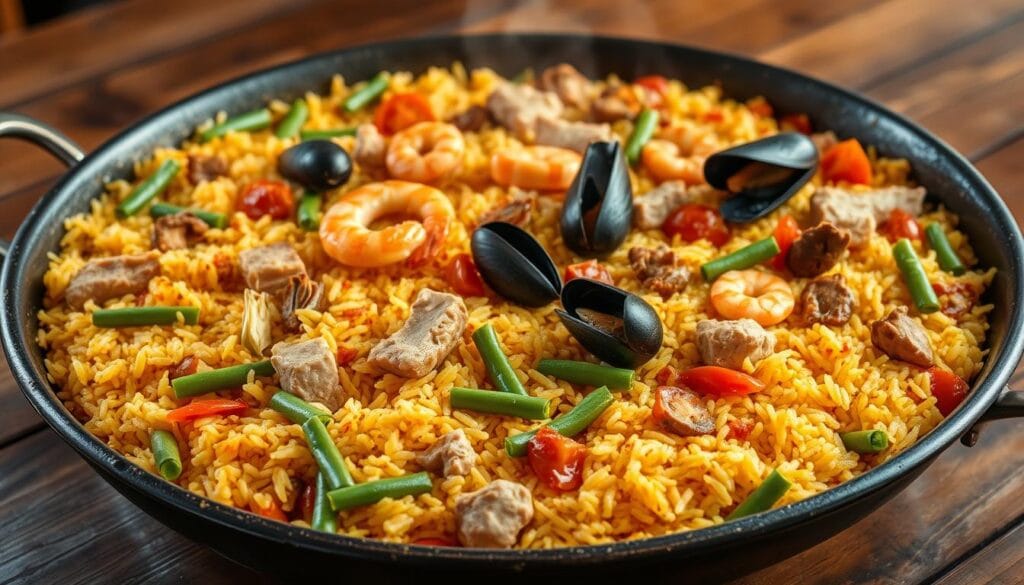
To make a real Paella Valenciana, follow this detailed recipe. It will take you on a culinary journey to Spain. This dish, from Valencia, is famous for its deep flavors and the crispy socarrat crust at the bottom.
Browning the Meat
First, heat olive oil in your paella pan over medium-high heat. Add the rabbit and chicken, browning them on all sides. This step is key for adding depth to the dish. Remove the browned meat and set it aside.
Sautéing Vegetables
In the same pan, add more olive oil if needed. Then, sauté the diced tomatoes, onions, and other vegetables. Cook until they’re soft, adding flavor to your paella.
Adding Rice and Broth
Next, add the Bomba rice, stirring to coat it in oil and mix with the vegetables. Then, add hot broth, saffron, and the browned meat. Make sure the rice is spread out and the liquid covers it.
The Socarrat: Creating the Perfect Bottom Crust
As the paella cooks, adjust the heat to get the socarrat. This crispy bottom layer is a must for good paella. When you hear it crackling, it’s ready.
| Step | Action | Notes |
|---|---|---|
| 1 | Brown the meat | Use medium-high heat |
| 2 | Sauté vegetables | Add olive oil as needed |
| 3 | Add rice and broth | Ensure even rice distribution |
| 4 | Achieve socarrat | Adjust heat, listen for crackling |
By following these steps, you’ll make a delicious and authentic Paella Valenciana. It will show off Spain’s rich culinary heritage.
The Art of Cooking Paella: Timing and Technique
Mastering Paella Valenciana needs precision in timing and technique. To get an authentic Spanish paella, understanding the cooking process is key.
Managing Heat Throughout Cooking
Adjust the heat to keep the surface simmering gently. This ensures the rice cooks evenly. Near the end, a quick increase in heat helps create the socarrat, the crispy crust at the bottom.
When to Stir (and When Not To)
Stirring is a delicate part of cooking Paella Valenciana. Don’t stir once the rice is added to avoid mushiness. But, initial stirring is needed to spread the ingredients evenly.
Visual Cues for Doneness
To check if it’s done, look at the rice’s texture and the paella’s consistency. The rice should be cooked but still slightly firm. forms at the bottom.
By mastering these techniques, you’ll make an authentic Paella Valenciana. It will bring Spain’s flavors to your table.
Common Mistakes to Avoid
Cooking Paella Valenciana can be a fun experience if you steer clear of common mistakes. To make sure your dish is authentic and tasty, knowing the mistakes to avoid is key. These errors can easily spoil the traditional Paella Valenciana recipe.
Rice Proportion Errors
Getting the right amount of rice is crucial for classic Paella Valenciana. Too little rice makes the paella too dense, while too much makes it soggy. The traditional ratio is essential for the perfect texture.
Stirring Too Much
Stirring the rice too often is a common mistake in traditional Paella Valenciana. This can make the rice mushy and unappealing. As a seasoned chef advises, “The secret to a perfect socarrat is to stir as little as possible.”
“Do not stir the paella – this is a well-known thing about this dish. If you stir the paella, you will end up with a slightly mushy, gloopy, rice dish.”
Incorrect Heat Management
Controlling the heat is crucial when cooking Paella Valenciana. Too high heat can burn the socarrat, while too low heat can leave the rice undercooked. Achieving the right heat balance is essential for a successful dish.
| Common Mistake | Consequence | Solution |
|---|---|---|
| Rice Proportion Errors | Soggy or dense paella | Use traditional rice ratio |
| Stirring Too Much | Mushy texture | Minimize stirring |
| Incorrect Heat Management | Burnt socarrat or undercooked rice | Balance heat levels |
Paella in Spanish Culture and Gatherings
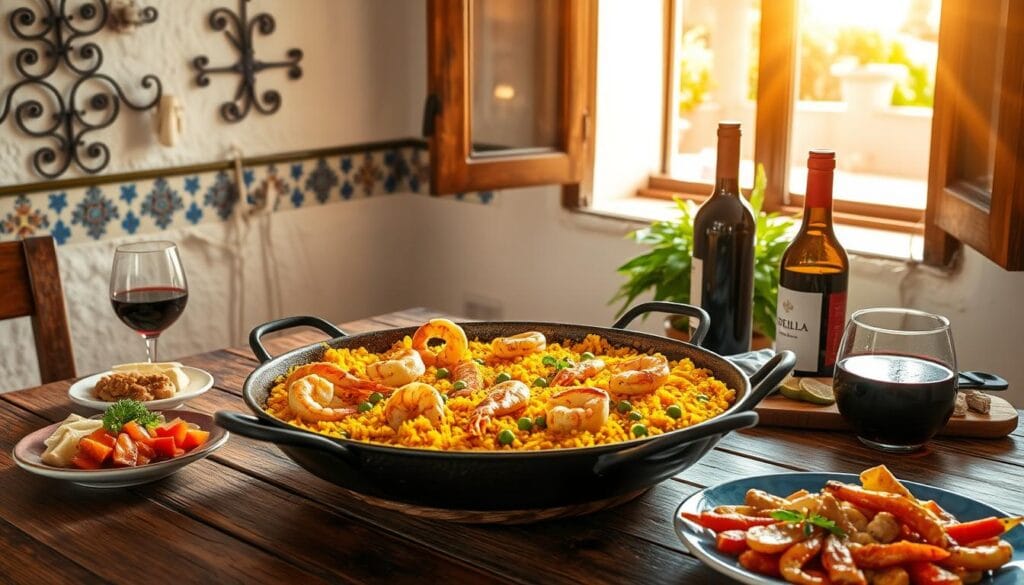
Paella is more than a meal in Spain; it’s a cultural phenomenon. It brings people together. This traditional Spanish dish is deeply ingrained in the country’s social fabric.
Sunday Family Traditions
In many Spanish households, Sundays are for family gatherings. Paella is often the star of the show. Families come together to cook and enjoy this authentic paella valenciana.
Festivals and Celebrations
Paella is also a staple at Spanish festivals and celebrations. Whether it’s a local fiesta or a national holiday, paella is on the menu. It brings people together and adds to the festive atmosphere.
Communal Cooking and Eating
The preparation and consumption of paella are communal activities. They foster a sense of community and togetherness. Gathering around the paella pan to share a meal is a cherished tradition in Spanish culture.
By embracing the tradition of cooking and enjoying paella, you’re not just making a meal. You’re participating in a rich cultural heritage that spans generations.
Regional Variations of Paella
Paella is a dish that changes with each region in Spain. You can find everything from seafood to vegetarian options. Each area has its own twist, using local ingredients and tastes.
Seafood Paella
Seafood paella, or Paella de Mariscos, is a favorite near the coast. It swaps rabbit and chicken for shrimp, mussels, and squid. This gives a fresh, tasty spin on the classic dish.
Mixed Paella
Mixed paella, or Paella Mixta, is a mix of meats and seafood. It’s perfect for those who can’t pick just one. You’ll find chicken, rabbit, shrimp, and mussels in this hearty dish.
Vegetarian Adaptations
Vegetarians can enjoy paella too. It’s made with artichokes, peppers, and beans instead of meat. This version, called Paella de Verduras, keeps the flavor of traditional paella but suits different diets.
| Paella Variation | Main Ingredients | Region |
|---|---|---|
| Seafood Paella | Shrimp, Mussels, Squid | Coastal Regions |
| Mixed Paella | Chicken, Rabbit, Shrimp, Mussels | Various Regions |
| Vegetarian Paella | Artichokes, Peppers, Beans | Inland and Coastal Regions |
These variations show how versatile paella is. They also highlight Spain’s rich food culture. Whether you stick to Paella Valenciana or try new things, making paella is a fun journey.
Serving and Pairing Your Paella
Paella Valenciana is more than just a meal. It’s an experience that starts with how you serve and pair it. Serving it the traditional way keeps the Spanish classic authentic.
Traditional Serving Style
Traditionally, Paella Valenciana is served right from the paella pan. It’s placed in the center of the table. This style makes dining a shared experience, encouraging everyone to interact.
As “Cracking into crab at the table is part of the fun here. The shells bring sweetness and a touch of mess, flavouring the rice as they steam…”, it makes the meal even more enjoyable.
Garnishes and Accompaniments
Adding fresh lemon wedges and rosemary or parsley sprigs can enhance the dish. For sides, a simple green salad or olives can balance the paella’s rich flavors.
Spanish Wine and Beverage Pairings
A dry Spanish white wine, like Albariño, goes well with Paella Valenciana. For those who prefer not to drink wine, try a refreshing Sangria without it or sparkling water with lemon. It cleanses your palate.
Side Dishes to Complete Your Spanish Meal
To round out your Spanish meal, try Pan con Tomate (bread with fresh tomato) or Español Salad. These dishes enhance the paella without overwhelming it.
Conclusion: Bringing Spanish Tradition to Your Table
You now have the tools to make an authentic Paella Valenciana. This dish shows the rich culinary heritage of Spain. By following the traditional recipe, you’re not just cooking a meal. You’re bringing a piece of Spanish culture to your table.
The traditional Spanish paella is more than a recipe. It’s an experience that brings people together. You’ve learned that the authentic paella valenciana is a mix of flavors and textures. Each ingredient is crucial to the final dish.
With practice, you’ll get better at cooking paella. It will become a hit at your gatherings. The effort you put into making this traditional Spanish paella will be worth it. You’ll enjoy the great flavors and the company of those you’re sharing it with.
So, don’t be afraid to try out the paella valenciana recipe. Make it your own while staying true to its roots. As you explore Spanish cuisine, you’ll see that paella is just the start. It will enrich your cooking and your cultural understanding.