
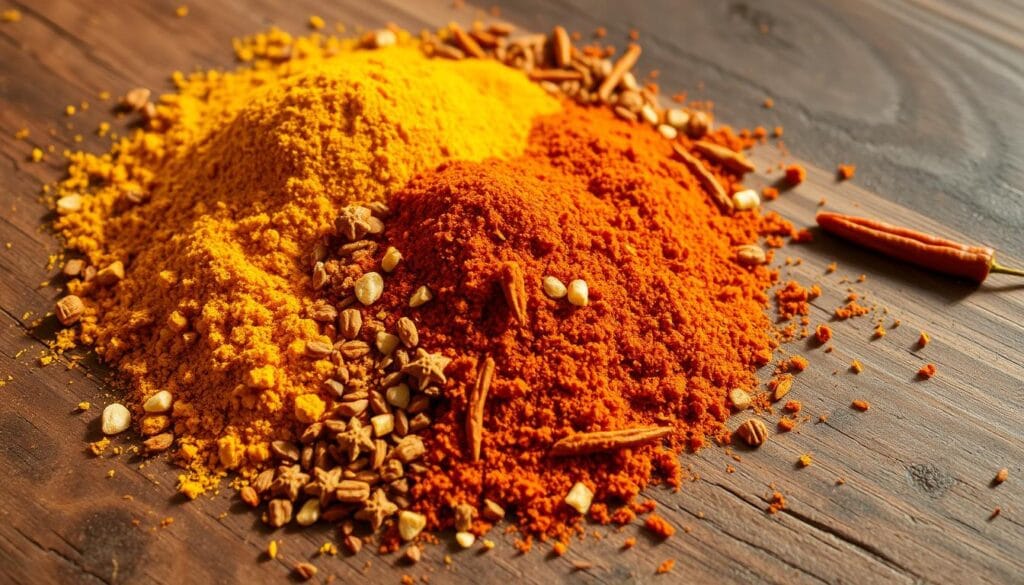
Are you tired of using store-bought biryani masala that lacks the aroma and flavor you crave in your biryani dishes? Making your own homemade biryani masala is easier than you think. It can elevate the taste of your cooking to a whole new level.
By roasting and grinding a blend of spices, you can create a biryani masala recipe that is tailored to your taste preferences. This not only ensures freshness but also avoids any preservatives or additives found in commercial mixes.
Table of Contents
What is Biryani Masala?
Biryani masala is key for authentic biryani. It’s a mix of spices that makes biryani special. This blend is what turns a good biryani into an amazing one.
The Essence of Biryani Flavor
Biryani masala is more than spices; it’s the essence of biryani. It includes whole and ground spices, each adding its own flavor and smell. Together, these spices create a perfect balance that takes the biryani to the next level.
“The secret to a great biryani lies in its masala. A well-crafted biryani masala can make all the difference in the flavor and aroma of the dish.”
Store-Bought vs. Homemade Biryani Masala
Store-bought biryani masala is easy, but making it at home is better. You can adjust it to your taste and avoid preservatives found in store mixes.
| Aspect | Store-Bought | Homemade |
|---|---|---|
| Customization | Limited | High |
| Preservatives | Often present | None |
| Flavor | Variable | Fresh and vibrant |
By making your own biryani masala, you can make sure your biryani is delicious. Plus, it’s easy to customize to your taste.
The Cultural Significance of Biryani Masala
Biryani masala is more than just a spice blend. It holds a deep cultural value. It’s a key part of Indian cuisine, showing the country’s rich history and diverse culture.
Origins and History
The spice trade between India and the world shaped biryani masala. Over time, it has changed, influenced by many cultures. Traditional biryani masala ingredients are roasted to enhance their taste.
The spice blend’s history is linked to biryani’s origins in the Indian subcontinent. Over the years, it has evolved, leading to different regional flavors.
Regional Variations Across India
India boasts many biryani masala types, each with its own flavor. You’ll find Hyderabadi, Lucknowi, and Sindhi biryani masalas, each with its own spice mix.
| Region | Distinctive Spices | Flavor Profile |
|---|---|---|
| Hyderabad | Kashmiri chilies, star anise | Mildly spicy, aromatic |
| Lucknow | Cardamom, saffron | Fragrant, slightly sweet |
| Sindh | Red chilies, garlic | Spicy, robust |
These variations show the richness and diversity of Indian cuisine. Biryani masala is key in defining each dish’s flavor and character.
Essential Ingredients for Authentic Biryani Masala
Authentic biryani masala is a mix of spices that add flavor and aroma. To make it at home, knowing the ingredients is key.
To make a flavorful biryani masala mix, you need whole spices, ground spices, and optional enhancers. The quality and freshness of these ingredients matter a lot.
Whole Spices
Whole spices are the heart of biryani masala. They include coriander seeds, cumin seeds, cinnamon sticks, cardamom pods, and cloves. Coriander seeds give a warm, earthy taste. Cumin seeds add a unique earthiness.
Cinnamon sticks bring a sweet, warm taste. Cardamom pods add a sweet, aromatic flavor. Cloves have a pungent, slightly bitter taste that balances the spices.
Using whole spices lets you roast and grind them fresh. This releases their oils and boosts the flavor of your biryani masala.
Ground Spices
Ground spices add depth and complexity to biryani masala. Common ones are turmeric, red chili powder, and garam masala powder. Turmeric gives a bright yellow color and a slightly bitter taste. Red chili powder adds heat. Garam masala powder brings a warm, aromatic flavor.
Ground spices are added towards the end of roasting or after grinding whole spices. This keeps their flavor strong.
Optional Flavor Enhancers
Some recipes include optional enhancers like star anise, fennel seeds, or bay leaves. Star anise adds a sweet, licorice-like taste. Fennel seeds give a sweet, anise-like flavor. Bay leaves add a mild, savory taste.
These optional ingredients let you customize your biryani masala. They help you create a unique flavor.
Equipment Needed for Making Biryani Masala
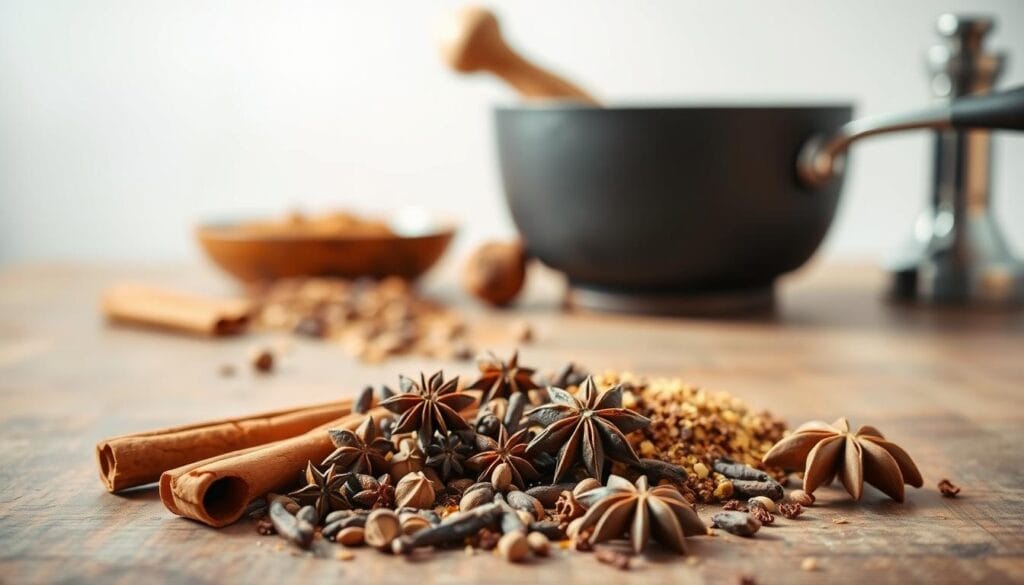
You don’t need fancy equipment to make Biryani Masala at home. Just basic kitchen tools that you probably have.
Essential Tools
You’ll need a dry pan to roast the spices. It should be big enough to hold all spices in one layer. This ensures they roast evenly. A heavy-bottomed pan is best because it heats evenly.
After roasting, you’ll need a blender or grinder to make the spices into powder. A coffee grinder or a spice grinder works great for this.
| Equipment | Purpose |
|---|---|
| Dry Pan | Roasting Spices |
| Blender/Grinder | Grinding Spices |
Optional Equipment for Better Results
Having extra tools can make making Biryani Masala better. A sieve helps get a finer powder by removing big pieces. Also, using a mortar and pestle lets you grind small batches better. This releases more flavor and aroma from the spices.
Step-by-Step Biryani Masala Recipe
To make the perfect Biryani Masala, follow a simple method. This method brings out the best flavors. It involves preparing the spices, roasting them, and then grinding them into a fine powder.
Preparing the Spices
The first step is to gather and prepare the spices. You’ll need whole spices like cinnamon, cardamom, and cloves. Make sure your spices are fresh and of high quality for the best flavor.
Measure out the spices you need. You’ll typically need:
- Cinnamon sticks
- Cardamom pods
- Cloves
- Other spices as per your recipe
Roasting Process
Roasting the spices is key to enhancing the flavor. Heat a pan over medium heat and add the spices. Stir occasionally to prevent burning and ensure even roasting.
The roasting takes about 5-7 minutes. You’ll know it’s done when the spices release their aroma and slightly change color. Be careful not to over-roast, as it can make the Biryani Masala bitter.
| Spice | Roasting Time | Notes |
|---|---|---|
| Cinnamon | 5-7 minutes | Releases a warm, sweet aroma |
| Cardamom | 5 minutes | Pods should be slightly open |
| Cloves | 3-5 minutes | Should be fragrant and slightly darkened |
Grinding and Finishing
After roasting, let the spices cool completely. Then, grind them into a fine powder in a grinder or spice grinder. Sifting the powder can help achieve a uniform texture.
Your homemade Biryani Masala is now ready. Store it in an airtight container to keep its flavor and aroma. Using your freshly made Biryani Masala will enhance the taste of your biryani dishes.
Tips for Perfect Homemade Biryani Masala
Making a real Indian biryani spice blend needs careful attention and top-notch spices. To get the best taste, it’s key to pick the right spices and know how to roast them.
Selecting Quality Spices
The base of a great biryani masala is the quality of its spices. Choose spices that are fresh, smell good, and look vibrant. For example, whole spices like cloves, cardamom, and cinnamon should smell strong and look good. Ground spices should be deep in color and smell strong too. Using the best spices will make your biryani masala taste amazing.
Proper Roasting Techniques
Roasting spices is a key step in making biryani masala. It brings out the spices’ natural oils and tastes. To roast spices right, use a dry pan over medium heat and stir often to avoid burning. The spices are done when they smell great and look a bit darker.
It’s important to roast spices in batches, depending on how long they take. For example, harder spices like cinnamon and cloves need more time than softer ones like coriander seeds.
- Roast whole spices until fragrant and slightly darkened.
- Let the roasted spices cool down completely before grinding.
- Grind the spices into a fine powder using a spice grinder or mortar and pestle.
Common Mistakes to Avoid
Even with the best ingredients and methods, mistakes can still happen. Common errors include burning the spices, which makes them taste bitter, and not storing the masala right, which can make it lose flavor. To avoid these mistakes, watch the spices closely while roasting. Also, store your homemade biryani masala in a sealed container, away from sunlight and moisture.
Regional Variations of Biryani Masala Recipe
Exploring biryani masala reveals many regional flavors. Each part of India has its own biryani masala style. These styles show local tastes and cooking traditions.
Hyderabadi Biryani Masala
Hyderabadi biryani masala is known for its strong taste. It uses more spices like cloves, cardamom, and cinnamon. Roasting these spices enhances their aroma, making it a key part of Hyderabadi cooking.
To make it at home, roast and grind the spices. This simple recipe captures the essence of Hyderabadi biryani masala.
Lucknowi Biryani Masala
Lucknowi biryani masala has a delicate flavor. It includes saffron, rose petals, and kewra for a unique scent. This makes it a flavorful biryani masala mix for authentic Lucknowi biryani.
Sindhi and Other Regional Variations
Sindhi biryani masala is bold and spicy. It often has red chili peppers, garlic, and ginger. Other places like Kerala and Tamil Nadu also have their own spice mixes.
Kerala’s mix might include coconut and curry leaves. Tamil Nadu’s could have coriander, cumin, and fennel seeds.
Some key ingredients vary by region:
- Whole spices like cloves, cardamom, and cinnamon
- Ground spices like turmeric, red chili powder, and coriander
- Optional ingredients like saffron, rose petals, and kewra
Understanding these variations lets you try different biryani masala recipes. You can make your own unique blends. Whether cooking at home or trying new flavors, knowing how to make biryani masala at home can improve your cooking.
Delicious Ways to Use Your Homemade Biryani Masala
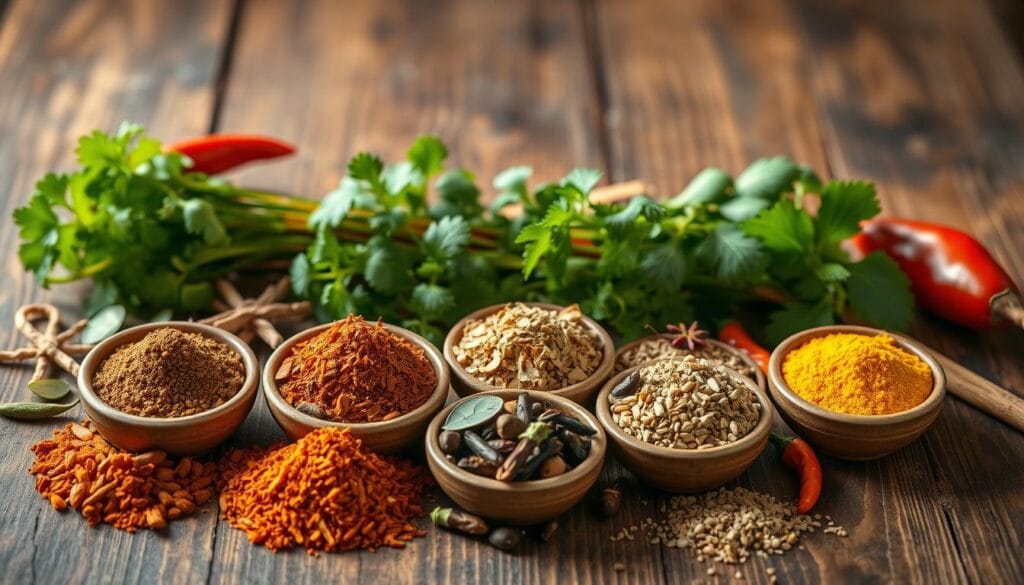
Your homemade biryani masala is a versatile spice blend. It can make many recipes better. It’s not just for traditional biryani dishes. Let’s see how you can use it in other ways.
Traditional Biryani Recipes
Biryani masala is key for traditional biryani recipes. It makes chicken biryani, vegetable biryani, and mutton biryani taste better. Just layer cooked rice with your choice of protein or veggies and sprinkle it with your homemade masala.
Creative Non-Traditional Uses
There are many other uses for your homemade masala. You can add it to:
- Soups and stews for more flavor
- Roasted vegetables for a spicy taste
- Marinades for chicken, lamb, or veggies
- Grilled meats for a smoky flavor
It’s also great for making flavorful rice bowls or seasoning popcorn or roasted nuts.
Quick Weeknight Meal Ideas
Here are some quick meal ideas:
- Make a biryani masala-infused quinoa salad with roasted veggies and lemon.
- Add biryani masala to your scrambled eggs for a spicy breakfast.
- Season grilled chicken or fish with it for a tasty dinner.
These ideas will make your meals more exciting with your homemade biryani masala.
Conclusion
Making your own biryani masala is easy and rewarding. It makes your biryani dishes taste better. Follow the simple recipe in this article to enjoy authentic biryani masala flavors.
Homemade biryani masala has many benefits. You can choose the best ingredients and adjust the flavors to your liking. With basic spices and simple steps, you can make a biryani masala that enhances your dishes.
By making your own biryani masala, you’ll improve your cooking. Try this easy recipe today. See how homemade biryani masala can elevate your dishes.