
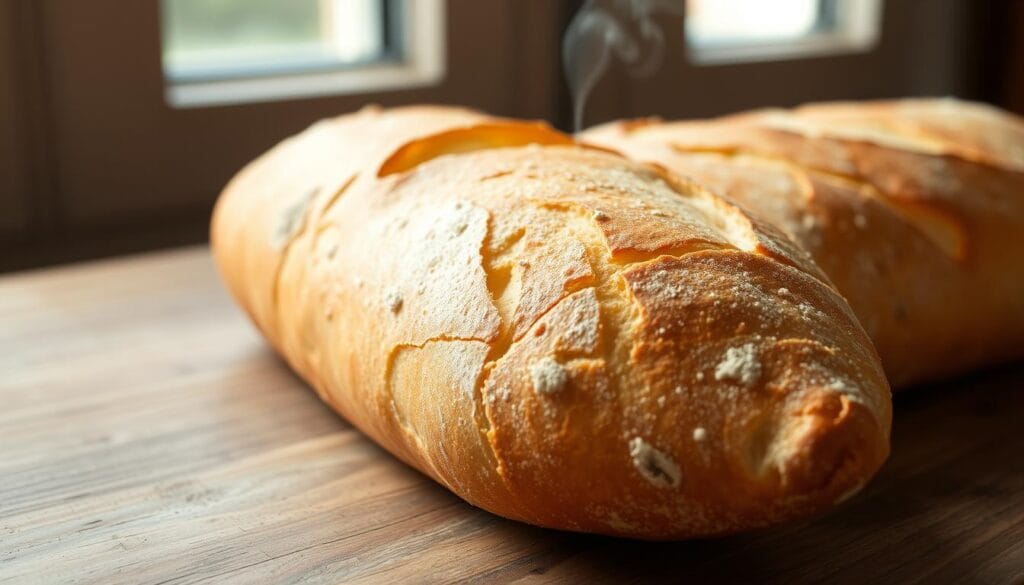
Imagine slicing into a warm, crusty loaf of homemade French bread, fresh from your oven. The aroma of freshly baked bread filling your home is a treat. It’s something you can have with simple French bread made easy.
This homemade baguette guide will teach you how to make a perfect, golden brown loaf every time. You’ll learn to use the right ingredients and techniques. This way, you can enjoy delicious, authentic French bread at home.
You’ll learn to make a deliciously chewy interior and a crispy crust, just like Parisian bakeries. By following this guide, you’ll make a mouth-watering homemade baguette. It will impress your family and friends.
Table of Contents
The Charm of French Baguettes
French baguettes are loved for their simple yet complex charm. They have a long, thin shape and a crisp crust. This makes them a delicious addition to any meal. Making a homemade baguette is both an art and a science. It requires patience, skill, and attention to detail.
What Makes a Perfect Baguette
A perfect baguette has a few key qualities. It has a crispy, golden crust that crackles when broken. It also has a soft, airy interior with a tender crumb. And it has a delicate balance of flavors, with hints of yeast and salt.
To get these qualities, using high-quality ingredients and techniques is key. Proper dough handling and careful fermentation are crucial.
Why Homemade Baguettes Are Worth the Effort
Making homemade baguettes takes time and effort. But the rewards are worth it. By baking your own baguettes, you get:
- Freshly baked bread, straight from your oven
- Customization options to suit your taste preferences
- The satisfaction of creating something delicious from scratch
With practice and patience, you can make delicious homemade baguettes that are as good as those from a professional bakery.
History and Origins of the French Baguette
The baguette is a key part of French food culture. It got its name from its long, thin shape, like a wand. Unlike traditional French bread, baguettes are long and have a crispy crust.
Traditional Significance in French Culture
Baguettes are a big part of French life, especially at meals and gatherings. They’re more than just bread; they represent French tradition and community. You’ll see people carrying them under their arms, showing their importance.
At family meals, a fresh baguette is often the main attraction. It stands for warmth and welcome. Sharing bread is a sign of friendship and togetherness.
Evolution of Baguette Making Techniques
Baguette making has changed over time, thanks to new tech and tastes. Back then, bakers used simple ingredients like flour, water, yeast, and salt. The dough fermented for a long time, giving the baguette its unique taste and texture.
- At first, making baguettes was hard work, with lots of manual effort.
- With the help of machines, making baguettes became easier and more people could do it.
- Today, bakers mix old ways with new tech, like special fermentation setups.
These changes have helped bakers make great baguettes all the time. This has made the baguette even more popular.
Essential Equipment for Baking Baguettes at Home
To start baking baguettes at home, you’ll need some key tools. The actual time spent baking is about 20 minutes. The right tools make the process easier and more fun.
Must-Have Tools
You’ll need basic tools for a successful homemade baguette. These include a large mixing bowl, measuring cups, and a digital scale. This ensures you measure ingredients accurately.
Mixing and Measuring Equipment
A stand mixer or a wooden spoon is great for mixing. A digital scale is essential for precise ingredient measurement.
Baking Surfaces and Pans
You’ll need a baking sheet or a baguette pan to bake your baguettes. A preheated stone can also help achieve a crispy crust.
Optional Equipment That Helps
While not essential, some tools can make baking baguettes better.
Specialty Baguette Tools
A bench scraper helps with dough handling. A lame or sharp knife is good for scoring your baguettes.
Steam Creation Methods
Steam in your oven can improve the crust. You can use a Dutch oven, a steamer basket, or a pan of water to create steam.
| Equipment | Purpose |
|---|---|
| Mixing Bowl | Combining ingredients |
| Digital Scale | Accurate measurement |
| Baking Sheet | Baking baguettes |
Ingredients for Our Easy Baguette Recipe
A classic baguette recipe needs just four main ingredients: flour, water, yeast, and salt. These simple parts mix to make a tasty homemade bread. It’s great for any meal.
Understanding the Role of Each Ingredient
The quality of your baguette depends on its ingredients. Flour gives it structure. Water makes the dough wet. Yeast makes it rise and adds flavor. Salt improves taste and controls yeast.
Flour Selection and Quality
For this easy baguette, use all-purpose flour. It’s strong yet tender. Choose unbleached, unbromated flour for the best taste.
Water, Salt, and Yeast Considerations
Water should be lukewarm to activate yeast. Use kosher or sea salt for better taste. You can use active dry or instant yeast. If using active dry, rehydrate it in water first.
Substitutions and Alternatives
While the basic ingredients stay the same, you can make some changes. For a quick baguette, use instant yeast instead of active dry. This saves time on rising.
Working with Different Flour Types
Try different flours like bread flour or whole wheat flour. Bread flour makes the crumb chewier. Whole wheat flour adds a nutty flavor and a denser texture.
Yeast Options and Conversions
If you prefer fresh yeast, you can use it instead of dry yeast. You’ll need about three times as much fresh yeast as dry. For a no-fail baguette, make sure to use the right amount of yeast.
Step-by-Step Easy Baguette Recipe
Now that we have our ingredients ready, let’s start making an easy baguette recipe. This guide will show you how to mix and knead the dough. You’ll also learn about the first rise and how to divide and pre-shape your homemade baguette.
Mixing and Kneading the Dough
Mixing and kneading are key steps in beginner baguette baking. You can mix by hand or use a stand mixer. Both methods work well for making the dough.
Hand Mixing Method
To mix by hand, put your ingredients in a big bowl. Use a wooden spoon or dough whisk to mix until it forms a shaggy mass. Then, knead the dough on a floured surface for about 10 minutes. It should become smooth and elastic.
Stand Mixer Approach
For a stand mixer, attach the dough hook. Mix your ingredients on low speed. Then, increase the speed to medium and mix until the dough is smooth and elastic, usually in 5-7 minutes.
First Rise: Bulk Fermentation
After kneading, put the dough in a lightly oiled bowl. Cover it with plastic wrap or a damp cloth. Let it rise in a warm, draft-free place. The first rise, or bulk fermentation, takes about 1-2 hours, or until it doubles in size.
Dividing and Pre-Shaping
When the dough has risen, gently deflate it by folding it over itself a few times. Divide the dough into 2-3 equal pieces. Pre-shape each piece into a rough log. Cover them with a clean towel and let them rest for 15-20 minutes before final shaping.
By following these steps, you’ll be well on your way to creating a delicious homemade baguette using our easy baguette recipe. The process might seem detailed, but it’s straightforward and rewarding, especially for those new to beginner baguette baking.
Mastering Baguette Shaping Techniques
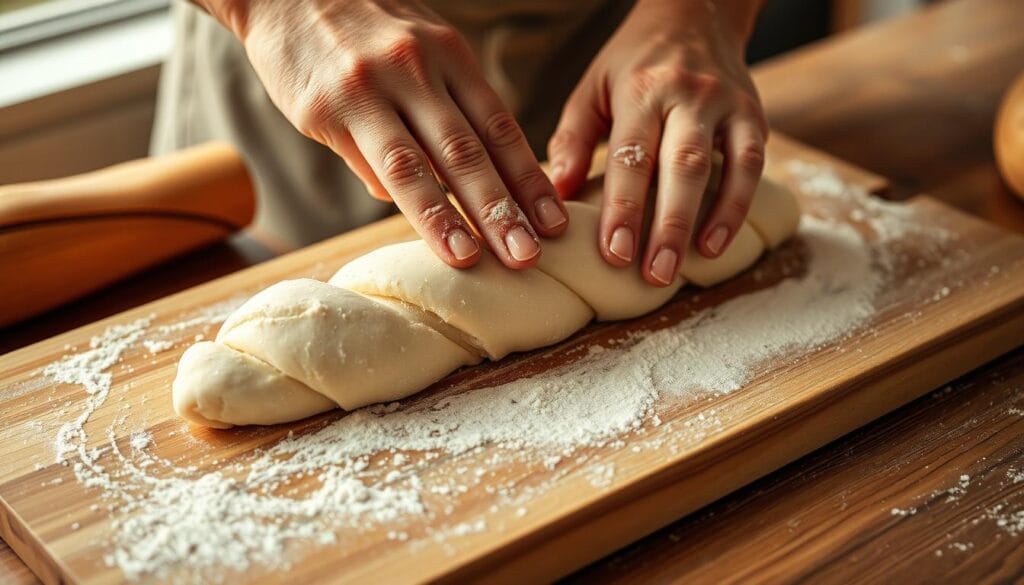
Learning to shape baguettes is key to making a perfect baguette at home. It’s about turning dough into a long, thin loaf with a crisp crust. This is what makes a classic baguette.
Creating the Classic Baguette Form
To make simple French bread, you must learn how to shape it. It’s not just about rolling the dough. It’s about creating tension and form.
Step-by-Step Shaping Guide
Here’s how to shape your baguette:
- Gently stretch the dough into a rectangle.
- Fold the dough over itself, applying gentle pressure.
- Roll the dough into a tight cylinder, maintaining even tension.
- Place the shaped baguette onto a lightly floured surface or proofing basket.
Achieving Proper Tension
Getting the right tension is important. Too little, and it spreads too much. Too much, and it bursts open. Practice to get it just right for a delicious baguette.
Scoring Patterns and Their Purpose
Scoring is not just for looks; it helps your baguette expand during baking. Different patterns can change how your bread looks and feels.
Traditional Scoring Designs
Traditional designs include simple diagonal cuts or more complex patterns. The goal is to make clean, swift cuts.
Lame Techniques and Angles
The angle and depth of your cuts are important. Aim for a 30-40 degree angle for a classic baguette.
| Scoring Technique | Description | Effect on Baguette |
|---|---|---|
| Diagonal Cuts | Simple, diagonal slashes | Classic appearance, even expansion |
| Complex Patterns | Intricate designs | Aesthetic appeal, controlled expansion |
Mastering these techniques will help you bake beautiful, delicious baguettes at home.
Proofing and Final Rise
To make a perfect baguette, knowing how to proof is key. Proofing lets the dough rest and rise before baking. It’s important for the baguette’s flavor and texture.
Signs of Properly Proofed Dough
A dough that’s proofed right will have doubled in size. It should feel light and airy. To check, gently press the dough; if it springs back slowly, it’s ready.
As Julie Child said, “The only time to eat diet food is while you’re waiting for a steak.” This is true for baguette baking too. Wait for the dough to be perfectly proofed.
“A good baguette is worth the wait.”
Common Proofing Mistakes to Avoid
One big mistake is over-proofing, which makes the baguette dense or flat. Watch the dough’s size and texture. Make sure it’s warm and humid to rise evenly.
Some mistakes to avoid are:
- Proofing in a cold environment, which slows down the rise.
- Over-proofing, which causes the dough to collapse.
- Not covering the dough, leading to a dry crust.
By avoiding these mistakes, you can get a quick baguette that will wow everyone.
Baking Your Baguettes to Perfection
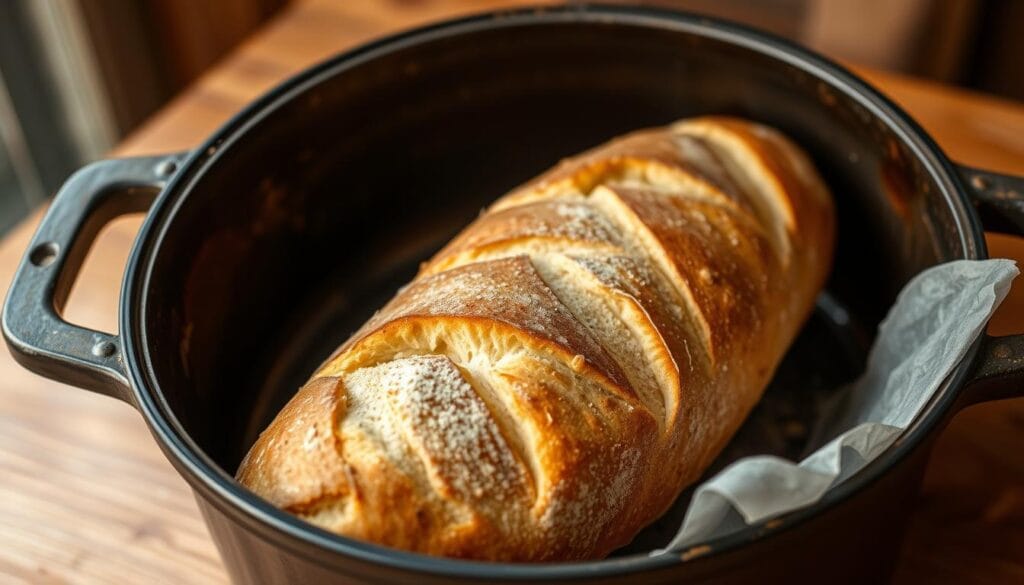
Baking baguettes to perfection needs careful attention, especially in your oven. You must focus on steam and temperature to get a crusty outside and soft inside.
Creating Steam in Your Home Oven
Steam is key for a French baguette’s crust. There are a few ways to get steam in a home oven.
Dutch Oven Method
Using a Dutch oven is easy. It traps moisture from the dough, making a steamy space. Preheat your Dutch oven and oven, then put your baguettes inside and cover.
Water Pan and Spray Techniques
Another way is to use a water pan at the oven’s bottom for steam. You can also spray water into the oven a few times to boost the steam.
Temperature and Timing Guidelines
The right temperature and time are key for a perfect baguette. A high temperature helps with rise and crust.
Visual Cues for Doneness
Baguettes are done when they’re deep golden brown and sound hollow when tapped. Baking time varies with oven and baguette size.
Cooling Process Importance
After baking, cool your baguettes on a wire rack. This prevents the crust from getting soggy. It’s vital for keeping the texture you’ve worked for.
By following these tips, you can bake delicious homemade baguettes like a pro. Remember, practice makes perfect. Don’t get discouraged if your first tries aren’t perfect.
Troubleshooting Common Baguette Problems
Making a classic baguette at home can be a learning experience. You might face issues like dense or flat loaves, crust and crumb problems, and flavor concerns. But, most of these problems have simple fixes.
Fixing Dense or Flat Baguettes
Dense or flat baguettes usually come from underproofing or overworking the dough. Make sure your dough has enough time to rise. Also, handle it gently when shaping. Check that your yeast is active and your oven is at the right temperature.
Addressing Crust and Crumb Issues
A crust that’s too hard or too soft can be fixed by adjusting baking time and temperature. For a softer crust, bake at a lower temperature for longer. Crumb issues, like large holes or a dense texture, can be solved by changing your mixing and proofing methods.
Resolving Flavor Concerns
If your baguette tastes bland, try adding a preferment like poolish or biga. You can also adjust the salt or use better flour. The right flour type is crucial for the baguette’s taste.
Storing and Reheating Your Homemade Baguettes
After baking your homemade baguette, keeping it fresh is the next challenge. It’s important to store and reheat it right to keep your simple French bread quality high.
Best Storage Practices
Short-Term Storage Solutions
For short-term storage, keep your quick baguette at room temperature. Wrap it in a paper bag or a clean cotton cloth. This helps with airflow and prevents moisture buildup. Don’t use plastic bags as they can make the crust soggy.
Freezing Methods for Longer Storage
Freezing is great for longer storage. Let your homemade baguette cool completely first. Then, wrap it tightly in plastic wrap or aluminum foil and put it in a freezer-safe bag. When you’re ready, just thaw and reheat.
Reheating Techniques to Restore Freshness
Reheating your homemade baguette can make it fresh and crispy again. Here are some ways to do it:
Oven Reheating Method
Preheat your oven to 375°F (190°C). Wrap your simple French bread in foil and heat for 10-15 minutes. For a crisper crust, remove the foil for the last 2-3 minutes.
Quick Microwave and Toaster Options
For a quick reheat, use the microwave. Wrap your quick baguette in a damp paper towel and heat for 20-30 seconds. Or, toast slices of your homemade baguette for a crispy snack.
Conclusion
Now you can make a delicious baguette at home with this easy recipe. The classic baguette is a key part of French cuisine. Making it yourself lets you enjoy fresh bread whenever you like.
By following this guide, you’ve learned to make a crusty, chewy baguette. It’s great for sandwiches, toast, or just enjoying by itself. At first, it might seem hard, but with practice, you’ll get better.
Now that you know how to make a baguette, try adding your own flavors and ingredients. Whether you’re experienced or new to baking, the joy of biting into warm bread is worth it.