

Imagine a dish that takes you straight to the Tuscan countryside with every bite. For many, a perfectly made delicious basil pasta is more than food; it’s an experience.
Make your pasta night special with a simple yet tasty basil pasta recipe. It’s sure to become a family favorite. Fresh basil makes this dish shine, adding a brightness and depth that’s irresistible.
Table of Contents
The Magic of Basil in Italian Cuisine
Basil is more than just a herb in Italian cuisine; it’s a cultural icon. You can experience the rich culinary heritage of Italy through the numerous dishes that feature basil as a main ingredient.
The Cultural Significance of Basil
Basil has been a staple in Italian cooking for centuries, especially in the southern regions. Its significance goes beyond flavor to cultural heritage. In Italian culture, basil is often linked with love and prosperity. This makes it a key ingredient in many traditional dishes.
- It’s a symbol of love and is often used in cooking for family and friends.
- Basil is a key ingredient in many traditional Italian recipes, such as pesto alla Genovese.
Why Basil Elevates Any Pasta Dish
Basil makes any pasta dish better by adding a fresh, aromatic flavor. This flavor complements a variety of sauces. Whether you’re making a classic authentic basil pasta sauce or a simple basil garlic spaghetti, basil is the key. It creates classic basil pasta dishes that are both delicious and visually appealing.
Some benefits of using basil in pasta include:
- Enhancing the flavor profile with its unique aroma.
- Adding a pop of color to your dishes.
- Pairing well with a variety of ingredients, from garlic to tomatoes.
Essential Ingredients for the Ultimate Basil Pasta Recipe
To make the best basil pasta, you need to know the key ingredients. Quality and how they work together are crucial for a great dish.
Selecting High-Quality Basil
The basil is the main attraction in basil pasta. Fresh basil is best for its lively taste and smell. But, whether to use fresh or dried basil depends on the season and what you like.
Fresh vs. Dried Basil Comparison
Fresh basil tastes bright and slightly sweet. Dried basil has a deeper, earthier flavor. Use fresh basil in summer and dried in winter when fresh is scarce.
Seasonal Considerations for Basil
Basil loves warm weather, growing best between 60°F and 80°F. From June to September, it’s at its best, offering the most flavor.
Choosing the Perfect Pasta Shape
The pasta shape matters a lot. For basil pasta, linguine or fettuccine are great. They let the basil sauce stick well.
| Pasta Shape | Characteristics | Pairing with Basil |
|---|---|---|
| Linguine | Long, flat, and narrow | Excellent for light, oily sauces with fresh basil |
| Fettuccine | Flat, wide noodles | Ideal for creamy basil sauces |
Supporting Ingredients That Enhance Basil Flavor
Ingredients like garlic, olive oil, and Parmesan cheese boost basil’s flavor. Garlic adds depth, olive oil highlights basil’s herbal notes, and Parmesan adds a salty, savory taste.
Kitchen Equipment for Perfect Basil Pasta
The right kitchen tools can really help when making easy basil pasta dishes. With the right equipment, cooking becomes simpler and the flavors of your basil pasta get better.
Must-Have Tools for Preparation
You’ll need some basic kitchen tools to start. A large pot for boiling pasta, a colander for draining, and a cutting board for chopping basil are must-haves. Also, a sharp knife and a garlic press make preparing ingredients easier.
| Tool | Purpose |
|---|---|
| Large Pot | Boiling Pasta |
| Colander | Draining Pasta |
| Cutting Board | Chopping Basil |
Specialty Equipment for Advanced Techniques
For more advanced techniques, think about getting a pasta maker for homemade pasta or a food processor for fresh pesto sauce. These tools can take your simple basil pasta dishes to the next level.
The Classic Basil Pasta Recipe You’ll Love
Discover the simplicity and flavor of a classic basil pasta recipe. It’s a staple in many kitchens. This dish combines fresh basil with perfectly cooked pasta, making it satisfying and delicious.
Ingredient Preparation and Measurements
You’ll need a few high-quality ingredients. Use 8 oz of pasta, like linguine or spaghetti. Also, get 1 cup of fresh basil leaves, 2 cloves of garlic, 1/2 cup of grated Parmesan cheese, 1/4 cup of extra virgin olive oil, salt, and pepper. Freshness is key, so choose the best basil you can find.
Step-by-Step Cooking Instructions
Cooking this basil pasta recipe is easy. First, boil a large pot of salted water. Cook your pasta until it’s al dente, as instructed on the package. While the pasta cooks, prepare the basil sauce.
Pasta Cooking Techniques
Make sure your pasta is cooked al dente. Test it a minute or two before the package says. Drain and set aside, saving some pasta water for the sauce.
Sauce Preparation Method
In a food processor, mix basil leaves, garlic, and a pinch of salt. Process until well combined. Add Parmesan cheese and process until it’s well incorporated. Slowly add olive oil while processing until the sauce is smooth.
Plating and Serving Suggestions
To serve, toss cooked pasta with the basil sauce. Add some reserved pasta water if the sauce is too thick. Top with more Parmesan cheese and a sprinkle of salt. Serve immediately and enjoy the fresh, vibrant flavors of your classic basil pasta.
Fresh Basil Pesto Pasta: From Scratch to Table
Pesto alla Genovese, a traditional Italian sauce, makes any pasta dish special. It comes from Genoa and is loved all over the world.
Authentic Pesto alla Genovese Recipe
To make authentic Pesto alla Genovese, start with the right ingredients. You’ll need fresh basil, garlic, pine nuts, Parmesan cheese, and extra virgin olive oil.
Traditional Ingredients
- Fresh basil leaves: The star of the dish, providing the signature flavor.
- Garlic: Adds depth without overpowering the basil.
- Pine nuts: Contributes a rich, nutty flavor.
- Parmesan cheese: Offers a salty, umami taste.
- Extra virgin olive oil: Binds the ingredients together.
Preparation Method
To make the pesto, blend the ingredients in a food processor until smooth. Start with basil and garlic, then add pine nuts and Parmesan. Finally, slowly add olive oil while blending.
Secrets to Silky, Flavorful Pesto Sauce
The secret to a silky pesto sauce is quality ingredients and the right blend. Fresh basil and careful blending are key. A squeeze of lemon juice can also boost flavor and keep the color bright.
By following these steps and using the freshest ingredients, you can make delicious homemade basil pasta. It’s perfect for any occasion or a quick dinner. This authentic basil pasta sauce is both versatile and flavorful.
Simple Basil Pasta Dishes for Busy Weeknights
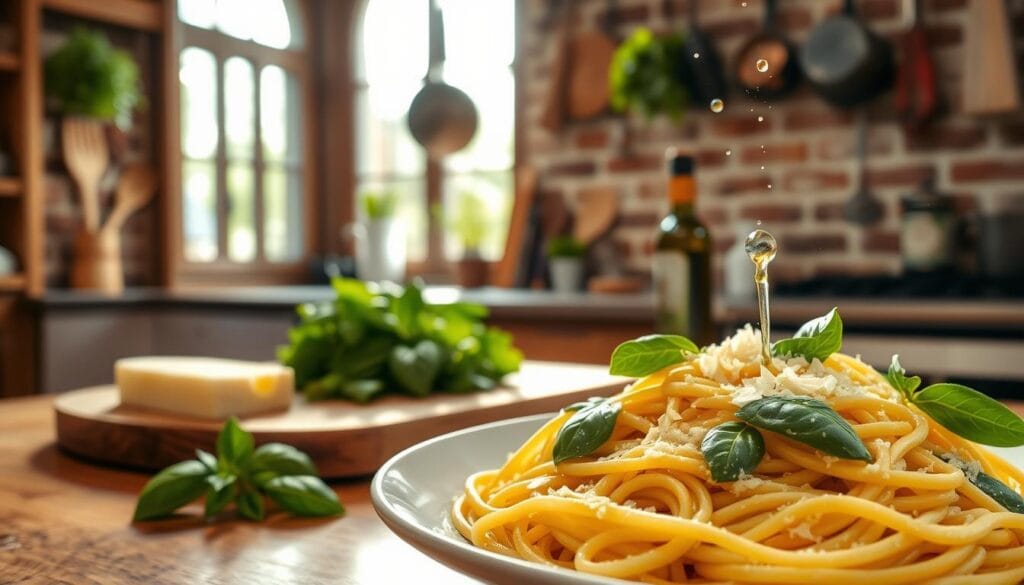
Evenings can be busy, but they don’t have to mean missing out on taste. Simple basil pasta recipes are quick to make. They’re great for those who want a tasty, homemade meal without spending hours cooking.
15-Minute Basil Garlic Spaghetti
Try the 15-minute basil garlic spaghetti for a quick, tasty meal. Cook spaghetti as the package says, then mix it with garlic sautéed in olive oil. Add fresh basil leaves and parmesan cheese. This shows how easy basil pasta dishes can be.
One-Pot Basil Pasta with Cherry Tomatoes
The one-pot basil pasta with cherry tomatoes is ideal for a busy night. Boil pasta, cherry tomatoes, garlic, and basil in salted water until the pasta is just right. Finish with olive oil and parmesan.
No-Cook Basil Pasta Sauce for Summer
In summer, a no-cook basil pasta sauce is refreshing. Blend basil, garlic, pine nuts, parmesan, and olive oil for a vibrant sauce. Mix it with cooked pasta and top with more basil and parmesan for a light, tasty meal.
These simple basil pasta dishes show you can have great flavor without spending too much time. With a few fresh ingredients and basic cooking, you can enjoy a homemade pasta dish even on the busiest nights.
Authentic Basil Pasta Sauce Variations
Explore the wide world of authentic basil pasta sauce variations. These will take your Italian cooking to the next level. Basil pasta sauce is key in Italian cuisine, offering endless possibilities for creativity.
The beauty of basil pasta sauce is its simplicity and quality ingredients. Mixing basil with other flavors creates a variety of sauces. These can enhance any pasta dish.
Classic Tomato and Basil Sauce
The classic tomato and basil sauce is a must-have in many kitchens. It needs fresh basil, ripe tomatoes, garlic, and olive oil. The trick is to balance the tomatoes’ acidity with the basil’s brightness. Here’s a simple recipe to start:
| Ingredient | Quantity |
|---|---|
| Fresh Basil Leaves | 1/4 cup |
| Canned Crushed Tomatoes | 2 cups |
| Garlic | 3 cloves |
| Olive Oil | 1/4 cup |
Creamy Basil Alfredo
Creamy basil Alfredo is perfect for special moments. It needs heavy cream, Parmesan cheese, and fresh basil. The cream and Parmesan make it rich, while the basil adds freshness.
Tips for a better Alfredo: Choose top-quality Parmesan and fresh basil for the best taste.
Basil and Olive Oil Sauce with Garlic
Try a lighter sauce with basil, olive oil, and garlic. It’s great for summer pasta and has just a few ingredients. Blend basil, garlic, and olive oil in a food processor. Season with salt to taste.
Exploring these authentic basil pasta sauce variations adds depth and creativity to your pasta. Whether you like a classic tomato sauce or creamy Alfredo, there’s a basil pasta sauce for every taste.
Homemade Basil-Infused Pasta Creations
Making pasta from scratch with basil opens up a world of possibilities. You can mix and match flavors and ingredients to make unique dishes. These dishes are sure to wow your guests.
Making Basil-Infused Pasta Dough
To make basil-infused pasta dough, mix fresh basil leaves with traditional pasta ingredients. The goal is to balance the flavors. This way, the basil adds depth without taking over.
Ingredient Ratios
Start with 1/4 cup of fresh basil leaves for every 2 cups of flour. You can tweak this ratio to match your taste.
Kneading and Resting Techniques
Kneading the dough well is key to get the right texture. After kneading, let it rest for at least 30 minutes. Then, roll it out.
Stuffed Pasta with Basil-Ricotta Filling
Use your homemade basil-infused pasta to make stuffed pasta. Mix cooked ricotta with chopped basil, salt, and a pinch of nutmeg. This makes a delicious filling.
| Ingredient | Quantity |
|---|---|
| Fresh Basil Leaves | 1/4 cup |
| Ricotta Cheese | 1 cup |
| Nutmeg | Pinch |
| Salt | To taste |
By following these steps, you can create delicious homemade basil-infused pasta creations. They’re perfect for any occasion.
Perfect Pairings for Your Basil Pasta
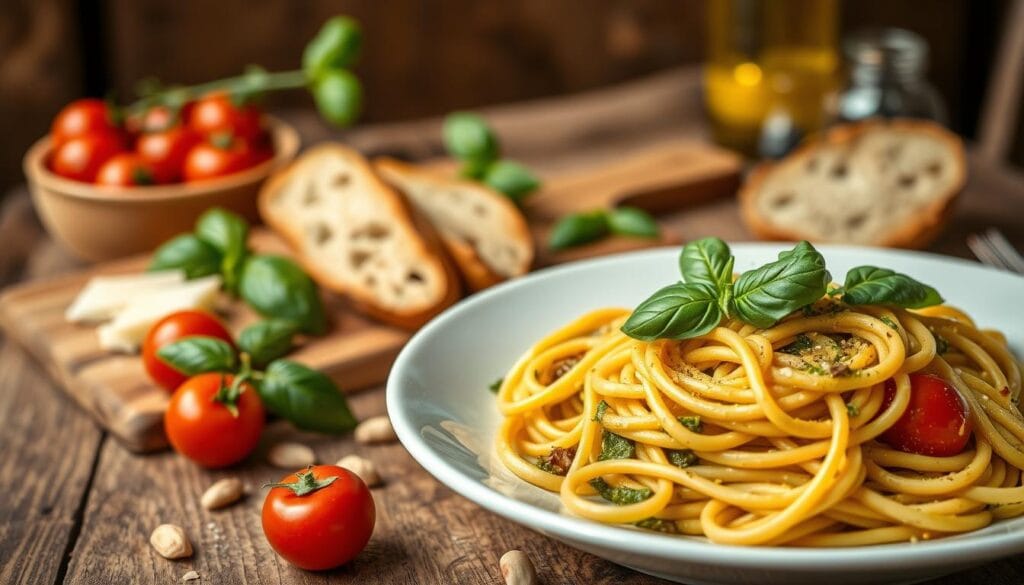
Make your meal special by pairing your basil pasta with the right sides and drinks. The perfect match can make a simple dish unforgettable.
Complementary Salads and Vegetables
Adding a fresh salad or roasted veggies to your basil pasta makes your meal more interesting and healthy. Try a Caprese salad with tomatoes, mozzarella, and basil for a taste of Italy. Roasted zucchini, bell peppers, or eggplant also pair well, adding a nice crunch and flavor.
Wine and Beverage Recommendations
For wine, a light white like Pinot Grigio or Sauvignon Blanc goes great with basil pasta. If you prefer not to drink, lemonade or iced tea with lemon is refreshing. These drinks highlight basil’s herbal taste without overwhelming the pasta.
Bread and Appetizer Suggestions
Start with bruschetta or garlic bread for an appetizer. They’re easy to make and loved by all. For something more, serve your pasta with grilled or toasted bread, rubbed with garlic and olive oil. This adds a delightful texture and taste to your meal.
By choosing these pairings, you’ll create a memorable dining experience. Your guests will be impressed and happy.
Nutritional Benefits of Including Basil in Your Pasta Dishes
Basil in your pasta dishes adds flavor and health benefits. It’s packed with antioxidants and has anti-inflammatory properties. This makes it a great choice for healthy pasta recipes.
Health Properties and Antioxidants in Basil
Basil is full of vitamins A, C, and K, and minerals like potassium and magnesium. Its antioxidants, like flavonoids and phenolic compounds, protect cells and reduce inflammation. Regular basil consumption boosts overall health and well-being.
Eugenol, a basil compound, fights inflammation. This makes basil good for those trying to avoid chronic diseases.
| Nutrient | Benefit |
|---|---|
| Vitamin A | Supports eye health and immune function |
| Vitamin C | Boosts immunity and antioxidant levels |
| Vitamin K | Essential for blood clotting and bone health |
Creating Balanced Basil Pasta Meals
To make a balanced meal, pair basil pasta with nutrient-rich foods. Add protein like grilled chicken or tofu, and mix in various vegetables. This boosts your dish’s nutritional value.
For a complete meal, serve basil pasta with a side salad or roasted veggies. This adds fiber, vitamins, and complements the basil’s flavors. Whether it’s a simple spaghetti dish or a complex azza-inspired recipe, balance is key.
Common Mistakes to Avoid When Making Basil Pasta Recipe
To make your basil pasta dish great, avoid common mistakes. It’s not just about mixing basil with pasta. You need to pay attention to details and balance flavors well.
Cooking Errors That Diminish Basil Flavor
One big mistake is overcooking the pasta. This makes the basil taste dull. Cook your pasta al dente to keep the flavor. Also, handle the basil gently to prevent bruising and losing flavor.
Improper Storage and Preparation Techniques
Storing basil wrong can make it wilt and lose flavor. Keep it in a cool, dry place or in the fridge with stems wrapped in a damp paper towel. Use sharp knives and don’t tear the leaves to preserve the flavor.
Seasoning and Balance Pitfalls
Getting the flavors right is key to a great basil pasta. Don’t add too much garlic or olive oil, as it can overpower the basil. Taste and adjust as you go to find the perfect balance.
Conclusion: Mastering the Art of Basil Pasta
Mastering basil pasta means knowing how to pair basil with pasta. With the right techniques and ingredients, you can make many tasty basil pasta dishes. These dishes can please different tastes and preferences.
You now know how to make the perfect basil pasta dish. This includes choosing the best basil and pairing it with other ingredients. Whether you’re making a classic dish or trying something new, the goal is to balance flavors and textures.
Keep exploring the world of basil pasta and don’t be afraid to try new things. With practice, you’ll create your own unique basil pasta dishes. These will surely impress your family and friends. So, start cooking and enjoy the delicious flavors of basil in your pasta.