

Are you searching for a side dish that everyone will love? Look no further than delicious mashed potatoes. They are rich, creamy, and full of flavor. They’re a favorite at family gatherings and holiday meals.
Making the best mashed potatoes recipe is simple. You just need a few ingredients to make a dish everyone will love. They pair well with roasted chicken, grilled steak, or as part of a big holiday meal. Mashed potatoes are always a hit.
Table of Contents
What Makes Perfect Mashed Potatoes?
The secret to perfect mashed potatoes is knowing about starch and moisture. Getting these right makes them fluffy and creamy.
The Science Behind Fluffy Mashed Potatoes
Two main things make fluffy mashed potatoes: starch and moisture balance.
Starch Content and Its Impact
The type of potato changes the starch content. Russet potatoes make a light mash. Yukon Gold potatoes add a richer taste.
Moisture Balance
It’s important to keep the right amount of moisture. Too little makes it dry, too much makes it soggy.
| Potato Type | Starch Content | Mash Texture |
|---|---|---|
| Russet | High | Light, fluffy |
| Yukon Gold | Medium | Creamy, rich |
| Red Bliss | Low | Waxy, moist |
Why This Recipe Stands Out
This perfect mashed potatoes recipe is special. It uses the right potatoes and controls moisture. This makes the potatoes both fluffy and tasty.
Using top-notch dairy and the right mashing method makes the potatoes smooth and creamy. It’s sure to wow everyone.
Essential Ingredients for the Best Mashed Potatoes Recipe
The key to amazing mashed potatoes is the quality of your ingredients. You need to pick the best potatoes, dairy, and seasonings.
Choosing the Right Potatoes
The type of potatoes you pick matters a lot. Russet and Yukon Gold are top choices for their unique qualities.
Russet vs. Yukon Gold
Russet potatoes are light and fluffy because of their high starch. Yukon Golds have a buttery taste and smooth texture. Both are great options, but they taste different.
Freshness and Storage Tips
It’s important to pick fresh, firm potatoes. Keep them in a cool, dark spot. Don’t use potatoes with green spots or sprouts.
Dairy Components: Butter, Milk, and Cream
Dairy is key for flavor and texture in mashed potatoes. Choose high-quality butter, milk, or cream for the best taste.
Full-Fat vs. Low-Fat Options
Full-fat dairy makes mashed potatoes richer and creamier. But, you can pick lower-fat options if you prefer.
Temperature Considerations
Using dairy at room temperature helps it mix better with potatoes. This makes your mash creamier.
Seasonings and Flavor Enhancers
Seasonings can take your mashed potatoes to the next level. Try garlic, herbs, or grated cheese for extra flavor.
Equipment You’ll Need
Having the right tools is crucial for achieving fluffy and delicious mashed potatoes. The equipment you choose can significantly impact the final texture and flavor of your dish.
Potato Masher vs. Ricer vs. Food Mill
The tool you use to mash potatoes can make a big difference. A potato masher is simple and manual, great for a chunky mash. A ricer is better for smooth, fluffy potatoes by pressing them through small holes. A food mill can also mash potatoes, offering a smooth texture with little effort.
| Tool | Texture Achieved | Effort Required |
|---|---|---|
| Potato Masher | Chunky | Manual, Moderate Effort |
| Ricer | Smooth, Fluffy | Manual, High Effort |
| Food Mill | Smooth | Low Effort, Electric |
Other Essential Tools
Pots and Colanders
A large pot is needed for boiling the potatoes, and a colander for draining them. Make sure your pot is big enough for all the potatoes.
Measuring Tools
Accurate measurements are key for perfect flavor. Use measuring cups and spoons for butter, milk, and seasonings.
The Best Mashed Potatoes Recipe: Step-by-Step Instructions
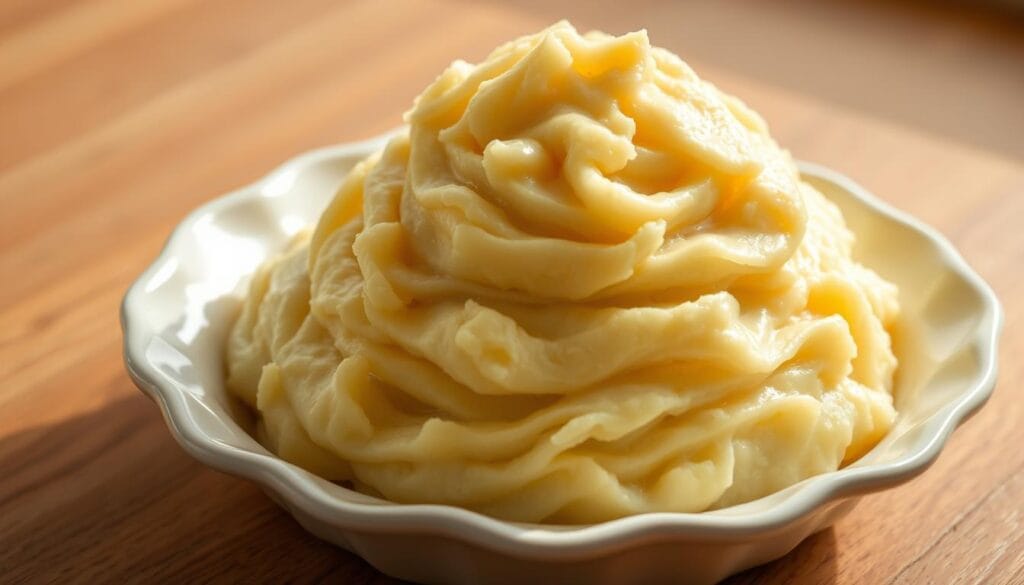
To make the ultimate mashed potatoes, follow these straightforward steps. This guide will walk you through preparing, boiling, and mashing your potatoes to achieve that perfect, creamy texture.
Preparing Your Potatoes
Start by selecting the right potatoes for your mashed potato recipe. Look for high-starch potatoes like Russet or Idaho for the fluffiest results. Wash the potatoes thoroughly, then peel them using a vegetable peeler. Cut the potatoes into evenly sized chunks to ensure they cook uniformly.
- Choose high-starch potatoes for the best results.
- Wash and peel the potatoes.
- Cut the potatoes into evenly sized chunks.
The Perfect Boiling Technique
Boiling your potatoes correctly is crucial for achieving the right texture. Start by placing the potato chunks in a large pot and covering them with cold water.
Starting Temperature
Begin with cold water to ensure the potatoes cook evenly. Add a generous amount of salt to the water – about 1-2 tablespoons for every 4 cups of water.
Cooking Duration
Bring the water to a boil, then reduce the heat to a simmer. Cook the potatoes for 15-20 minutes, or until they are tender when pierced with a fork.
Draining and Drying
Once the potatoes are cooked, drain them in a colander to remove excess water. Return the potatoes to the pot and place it over low heat for a minute or two to dry out any remaining moisture. This step is crucial for preventing a soggy mash.
Mashing and Incorporating Ingredients
Now it’s time to mash your potatoes. Use a potato masher, ricer, or food mill to break down the potatoes until they’re smooth.
Order of Addition
Add butter and milk gradually, stirring between each addition to avoid over-mixing. Start with a small amount of butter and milk, then add more as needed to achieve your desired consistency.
Mixing Techniques
Use a gentle folding motion when mixing in the ingredients to prevent the potatoes from becoming gluey. Stop mixing as soon as the potatoes are smooth and creamy.
By following these steps, you’ll be able to create a creamy mashed potato recipe that’s sure to impress. Remember, the key to perfect mashed potatoes is in the details – from the type of potatoes you choose to the technique you use for boiling and mashing.
Pro Tips for Creamy and Fluffy Mashed Potatoes
The secret to creamy and fluffy mashed potatoes is all about temperature and texture. Learning these tricks can take your mashed potatoes from great to amazing.
Temperature Control Secrets
Temperature is key for the perfect mash. Make sure your potatoes are warm when you mash them. This helps mix in butter and dairy better, making them smooth. Avoid mashing cold potatoes, as this can lead to a gluey consistency.
Texture Troubleshooting
Even with the best plans, mashed potatoes can go wrong. Here are tips for fixing common texture problems.
Fixing Gummy Potatoes
If your mashed potatoes are gummy, they’ve been overworked. To fix this, add some warm milk or cream. This loosens the texture without mixing too much.
Adjusting Consistency
If your potatoes are too thick, add more milk or cream. For thin potatoes, add butter or sour cream to thicken them.
Make-Ahead Strategies
Want to save time on serving day? Prepare your mashed potatoes ahead. Mash them, then refrigerate or freeze until needed. Reheat them, adding more dairy if needed. This make-ahead approach is great for holidays or big gatherings.
Delicious Variations to Try
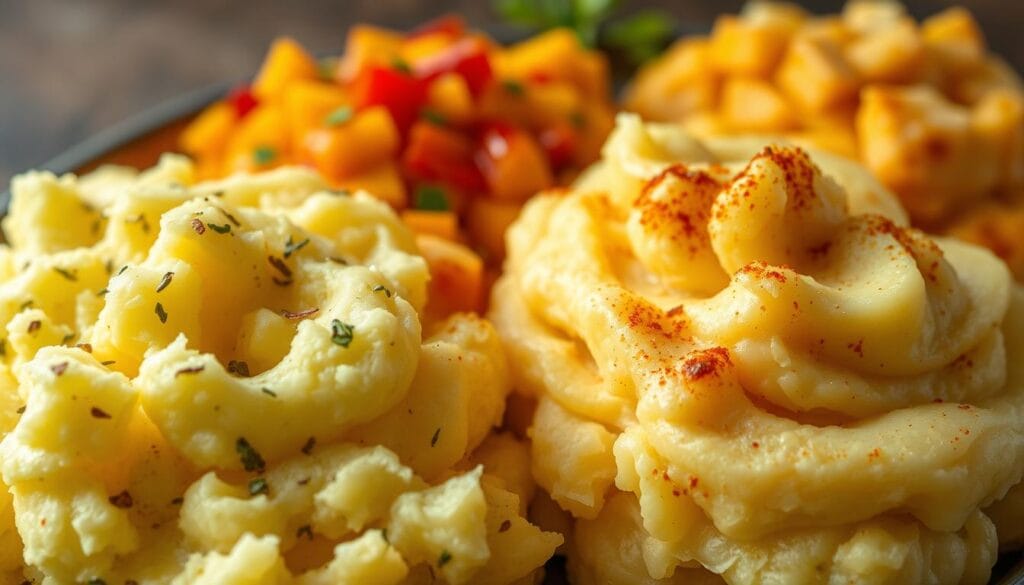
Make your mashed potatoes more exciting by trying different flavors. Mashed potatoes are very versatile. You can mix in various ingredients to create unique tastes.
Garlic Mashed Potatoes
Garlic can make your mashed potatoes taste amazing. Just mince a few cloves and mix them in. Roasting the garlic first will make the flavor even stronger.
Loaded Mashed Potatoes with Bacon and Cheese
Make your mashed potatoes extra special with bacon and cheese. Add crispy bacon and some melted cheese. This will give them a rich, satisfying taste.
Herb-Infused Mashed Potatoes
Adding fresh or dried herbs can make your mashed potatoes fresh and tasty. Chives, parsley, or dill work well. Add them towards the end to keep their flavor and color.
Healthier Alternatives
Want a healthier version of mashed potatoes? Here are some tips:
Lower-Calorie Options
Use low-fat or non-dairy milk to cut calories. Adding steamed veggies like broccoli or cauliflower also boosts nutrition.
Dairy-Free Substitutions
For a dairy-free option, use olive oil or vegan butter instead of regular butter. Choose almond milk, soy milk, or coconut milk for the milk. These changes make mashed potatoes better for those with dietary needs.
| Variation | Key Ingredients | Benefits |
|---|---|---|
| Garlic Mashed Potatoes | Garlic, potatoes, butter | Aromatic flavor, savory twist |
| Loaded Mashed Potatoes | Bacon, cheese, potatoes | Decadent, rich, satisfying |
| Herb-Infused Mashed Potatoes | Herbs (chives, parsley, dill), potatoes | Fresh flavor, visually appealing |
| Healthier Alternatives | Low-fat milk, steamed vegetables, dairy-free substitutes | Lower calorie, nutrient-dense, dairy-free |
Try these variations to make your mashed potatoes special. They’re delicious and fit your dietary needs. Whether you’re looking for something simple or fancy, these ideas will help you create something amazing.
Common Mistakes to Avoid
To make perfect mashed potatoes, avoid common mistakes. These errors can make your dish less creamy and tasty. Knowing these mistakes helps ensure your mashed potatoes are always delicious.
Overworking the Potatoes
One big mistake is overworking the potatoes. Using a mixer or blender can make them gluey. Instead, use a potato masher or ricer for a smooth texture.
Julia Child said, “The only time to eat diet food is while you’re waiting for the steak to cook.” This shows the joy of rich dishes like mashed potatoes, made right.
Temperature and Timing Issues
Temperature and timing are key for mashed potatoes. Watch out for cold ingredients and overcooking.
Cold Ingredients Problem
Cold butter and milk can make your mash lumpy. Make sure your dairy is at room temperature. This simple step improves the texture a lot.
Overcooking Issues
Overcooking makes potatoes soggy. Drain them well and heat them gently to dry out. This keeps them light and fluffy.
Seasoning Errors
Seasoning mistakes can ruin your mashed potatoes. Too little seasoning makes them bland, too much overpowers the taste. Taste and adjust as you go. The right seasoning makes a big difference.
Serving and Pairing Suggestions
Now that you’ve mastered the ultimate mashed potatoes recipe, it’s time to explore the perfect pairing options. Mashed potatoes are a versatile side dish that can complement a wide range of main courses. Whether you’re planning a casual dinner or a holiday feast, here are some ideas to elevate your meal.
Classic Pairings
Classic pairings are timeless for a reason. Your creamy mashed potato recipe pairs beautifully with roasted meats like beef, lamb, or chicken. For a comforting meal, serve mashed potatoes alongside meatloaf or braised short ribs. The key is to balance the richness of the mashed potatoes with the flavors of your main dish.
- Roasted chicken with herbs
- Grilled steak with garlic butter
- Pan-seared salmon with lemon
Holiday Meal Integration
Mashed potatoes are a staple at many holiday gatherings. They can be a great side dish for Thanksgiving or Christmas dinner. Consider adding some festive flavors to your mashed potatoes, such as crispy bacon, chives, or a hint of truffle oil, to make them even more special.
| Holiday | Main Course | Mashed Potato Variation |
|---|---|---|
| Thanksgiving | Roasted turkey | Cranberry and orange zest |
| Christmas | Baked ham | Garlic and rosemary |
Leftover Transformation Ideas
If you find yourself with leftover mashed potatoes, don’t worry! There are plenty of creative ways to repurpose them. Here are a few ideas:
Potato Pancakes
Shape leftover mashed potatoes into patties, add some grated cheese and chopped herbs, and pan-fry until crispy. Serve with sour cream or applesauce.
Shepherd’s Pie Topping
Use leftover mashed potatoes as the topping for a shepherd’s pie. Simply layer cooked ground meat and vegetables in a baking dish, top with mashed potatoes, and bake until golden brown.
“The best way to get started is to quit talking and begin doing.” – Walt Disney
Conclusion
Now you know how to make the best mashed potatoes recipe. Choose the right potatoes and mix them with the perfect dairy. Add some flavor enhancers for a delicious dish that will wow your loved ones.
Creating creamy and fluffy mashed potatoes is all about the details. Pay attention to temperature, texture, and seasoning. This way, you’ll avoid common mistakes and make a dish everyone will love.
The best mashed potatoes recipe is great for any occasion. It’s perfect for holiday meals or a comforting side dish. So, try it out and enjoy making delicious mashed potatoes for those you love.