
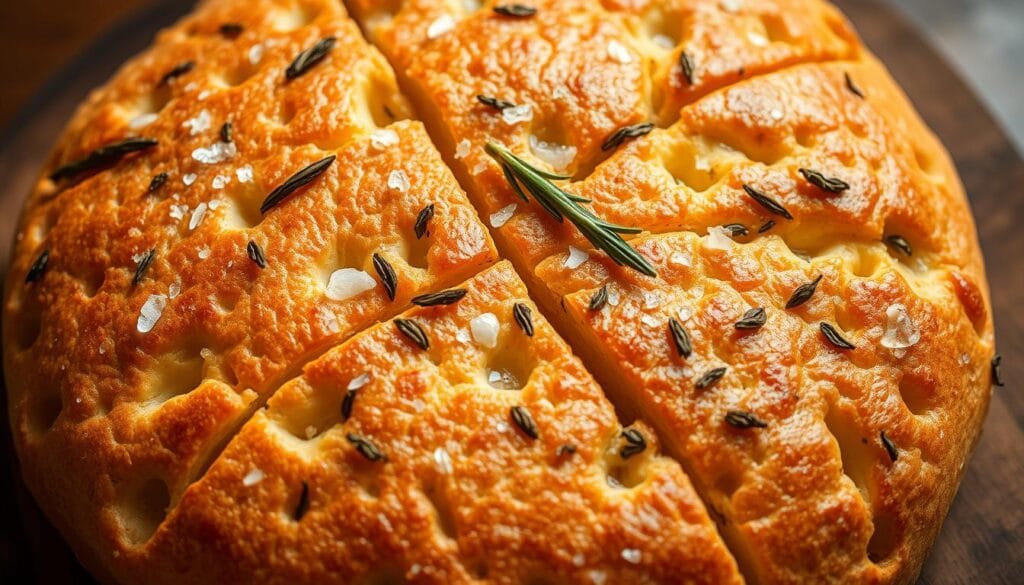
Imagine biting into a warm, soft, and aromatic homemade bread. It’s perfect for any meal. For those with gluten intolerance or sensitivity, finding a gluten-free alternative is a big deal. It means not having to give up on taste or texture.
Now, you can enjoy a gluten-free focaccia that’s easy to make and full of flavor. This simple recipe shows you how to make a real Italian bread at home. It uses ingredients that fit your dietary needs.
Table of Contents
The Art of Gluten Free Bread Making
Making gluten-free bread is a detailed process. It requires picking the right ingredients and preparing them well. To make a tasty gluten-free focaccia, you must know the challenges of gluten-free baking.
Why Traditional Focaccia Is Off-Limits for Gluten Free Diets
Traditional focaccia uses wheat flour, which has gluten. This makes it bad for people with gluten issues. Gluten free diets need special flours that mimic traditional focaccia’s taste and texture. But, these flours lack gluten, making it hard to get the bread right.
The Challenge of Creating Authentic Texture and Flavor
To make a real gluten free focaccia, you must pick the right ingredients and methods. You need to find the best gluten-free flours and binders for the right texture. Also, using good olive oil and toppings can make your focaccia taste better. As gluten-free baking expert,
“The key to making great gluten free bread is to understand the role of each ingredient and how they interact with each other.”
To see how gluten-free focaccia differs from traditional, here’s a comparison:
| Characteristics | Traditional Focaccia | Gluten-Free Focaccia |
|---|---|---|
| Main Ingredient | Wheat Flour | Gluten Free Flour Blend |
| Texture | Soft, Chewy | Can be dense or crumbly if not made correctly |
| Flavor | Rich, slightly yeasty | Can be similar with right ingredients and techniques |
Understanding Focaccia’s Italian Heritage
Focaccia bread has a rich history tied to Italian culture. It has been a beloved dish in Italy for centuries. Known for its soft texture and tasty toppings, it’s a true Italian treasure.
What Makes Traditional Focaccia Special
Traditional focaccia stands out for its simplicity and top-notch ingredients. It’s made with flour, water, yeast, salt, and olive oil. Often, it’s topped with rosemary and sea salt.
The slow rise in making focaccia gives it a unique texture and taste. Giovanni Rana, a famous Italian baker, once shared, “The secret to a great focaccia lies in the quality of its ingredients and the patience of its maker.” This shows how important it is to use the best ingredients and follow traditional ways.
How Gluten-Free Versions Capture the Essence
Gluten-free focaccia tries to match the taste and feel of the traditional version. Bakers use gluten-free flours and special ingredients to get the right texture. This way, they make a gluten-free focaccia that’s just as tasty as the original.
For example, a gluten-free flour blend of rice, almond, and coconut flour can help get the right texture. Adding rosemary and olive oil also brings out the flavor, making it taste like traditional focaccia.
The Best Gluten-Free Focaccia Recipe
Learn how to make the perfect simple gluten-free focaccia with our easy recipe. This homemade bread is made with love and the best ingredients. It’s a tasty gluten-free focaccia that will wow your family and friends.
Ingredient List with Measurements
To make this delicious gluten-free focaccia, you’ll need:
- 1 1/2 cups gluten-free flour blend
- 1/4 cup olive oil
- 1/4 cup warm water
- 2 teaspoons active dry yeast
- 1 teaspoon salt
- 1 tablespoon sugar
- 2 cloves garlic, minced
- 1 tablespoon chopped fresh rosemary
Preparation Time and Yield
This recipe takes about 30 minutes to prepare. It needs about 1 hour to rise. You’ll get 2 round loaves of tasty gluten-free focaccia.
Nutritional Information
Here’s what you get per serving (1 slice):
| Nutrient | Amount per serving |
|---|---|
| Calories | 120 |
| Fat | 2g |
| Carbohydrates | 25g |
| Protein | 2g |
| Sodium | 150mg |
By following this simple recipe, you’ll enjoy tasty gluten-free focaccia soon. The mix of gluten-free flour, olive oil, and herbs makes a flavorful and aromatic bread. It’s great for any occasion.
Essential Ingredients Explained
To make a great gluten-free focaccia, knowing the key ingredients is key. The right mix of ingredients will give you the perfect texture and taste.
Flour Blends That Work Best
Choosing the right flour blend is crucial for gluten-free focaccia. A mix of rice flour, potato starch, and tapioca flour works well. You can also try almond flour or coconut flour, but they might change the taste and texture.
| Flour Type | Characteristics |
|---|---|
| Rice Flour | Light texture, neutral flavor |
| Potato Starch | Helps with structure, slightly sweet |
| Tapioca Flour | Adds chewiness, neutral flavor |
Xanthan Gum and Other Binding Agents
Xanthan gum is a common ingredient in gluten-free baking. It helps the dough stick together. You can also use guar gum or psyllium husk, depending on your flour mix and desired texture.
“The right binding agent can make all the difference in gluten-free focaccia, providing the necessary structure without altering the flavor.”
The Importance of Quality Olive Oil
Quality olive oil does more than just add flavor. It also affects the focaccia’s texture. Using top-notch, extra virgin olive oil will make your gluten-free focaccia richer and more authentic.
By using these essential ingredients, you can make a gluten-free focaccia recipe that’s just as good as the traditional kind. Try different mixes to find what works best for you. Don’t be afraid to experiment with new ingredients to make your gluten-free olive oil focaccia even better.
Equipment You’ll Need
Getting the right tools is essential for making great homemade gluten-free focaccia. The right equipment makes the process smoother and ensures your focaccia is delicious and authentic.
Baking Pans and Preparation Tools
You’ll need a good baking pan to start. A rectangular baking sheet or a round pizza pan is perfect for focaccia. Don’t forget parchment paper or a silicone mat to prevent sticking. Also, have a pastry brush ready for applying olive oil to the dough.
Mixing and Measuring Equipment
A stand mixer with a dough hook attachment is best for mixing. But, a large mixing bowl and a wooden spoon or spatula will work too. It’s important to measure ingredients accurately. Use a digital scale for this. You’ll also need measuring cups and spoons for extra ingredients.
With the right equipment, you’re on your way to making a delicious gluten-free focaccia that will wow everyone. Remember, the quality of your tools can impact the final result. So, choose wisely.
Step-by-Step Baking Instructions
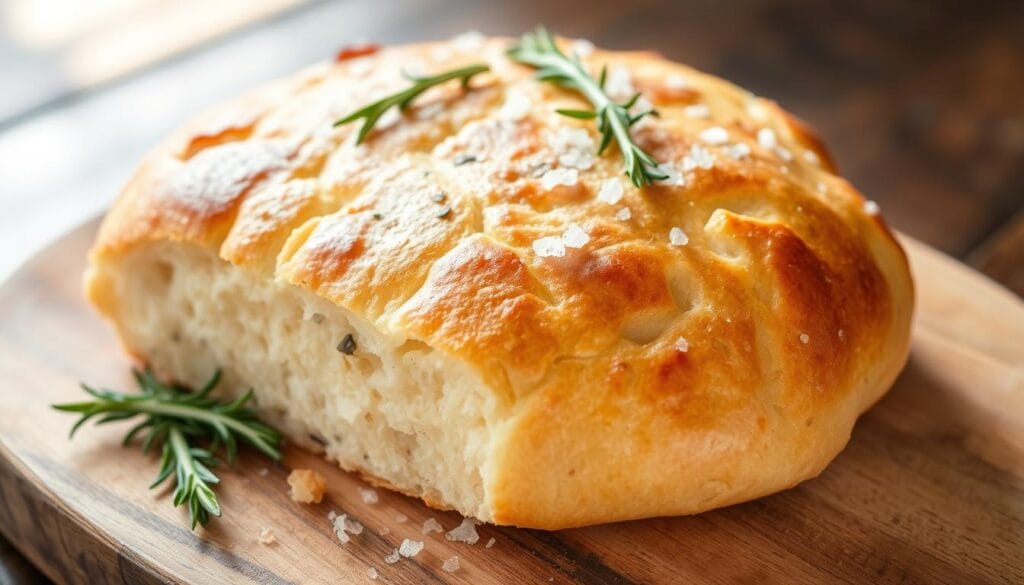
Follow these detailed baking instructions to make a delicious gluten-free focaccia. It’s easy to make easy gluten-free focaccia bread with a bit of care. The steps are simple.
Preparing Your Ingredients
First, collect all your ingredients and measure them carefully. For the best gluten-free focaccia recipe, choose high-quality ingredients. This includes a good gluten-free flour blend and fresh yeast. Also, use high-quality olive oil for the best flavor.
Make sure your ingredients are at room temperature. This helps your dough come out right.
Mixing the Dough Properly
In a big mixing bowl, mix the dry ingredients. This includes gluten-free flour, yeast, salt, and any herbs or seasonings. In another bowl, mix the wet ingredients like olive oil, water, and eggs or egg replacers.
Slowly add the wet ingredients to the dry ones. Keep mixing until you get a smooth, sticky dough. A stand mixer with a dough hook attachment can help a lot.
First Rise and Shaping Techniques
Put the dough in a lightly oiled bowl. Cover it with plastic wrap or a damp cloth. Let it rise in a warm, draft-free place until it doubles in size. This step is key for the focaccia’s texture.
After it rises, gently press down the dough. Shape it into a round or oblong shape. Place it on a baking sheet or pizza stone sprinkled with cornmeal.
Creating the Signature Dimples
Use your fingers to make the dough’s surface dimpled. This makes the focaccia look good and bake evenly.
Adding Toppings and Final Rise
Brush the dough with olive oil and add your favorite toppings like rosemary, sea salt, or olives. Let it rise for 20-30 minutes before baking.
This final rise makes the dough relax. This helps it bake up tender.
Baking Techniques for Perfect Texture
To bake a simple gluten-free focaccia that’s crispy outside and soft inside, you need to master a few key techniques. The right baking method is key to achieving the perfect texture.
Temperature and Timing Considerations
Baking your gluten-free rosemary focaccia at the right temperature is crucial. Preheat your oven to 425°F (220°C) for that perfect crust. The baking time varies based on focaccia size, but it usually takes 15-20 minutes.
- Preheat the oven to the correct temperature.
- Keep an eye on your focaccia during the baking time.
- Use a baking stone or baking sheet for even heating.
Creating That Crispy Exterior and Soft Interior
To get a crispy exterior and a soft interior, focus on dough preparation and baking. Brushing the dough with olive oil before baking helps create a golden, crispy crust.
- Don’t overmix the dough to keep it tender inside.
- Let the dough rise properly to develop the right texture.
- Bake the focaccia until it’s golden brown on the outside.
Classic Toppings and Flavor Variations
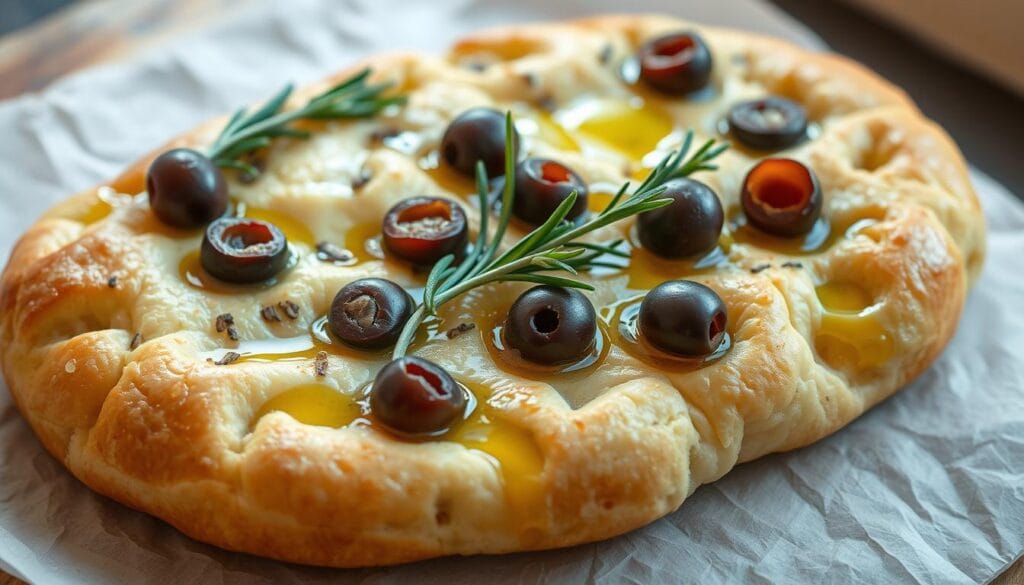
Now that you know how to make gluten-free focaccia, it’s time to try different toppings and flavors. This bread is very versatile. You can use everything from classic herbs to savory meats and sweet ingredients.
Traditional Rosemary and Sea Salt
Rosemary and sea salt is a classic Italian choice for gluten-free focaccia. The piney taste of rosemary goes well with the salty flavor of sea salt. This makes a tasty gluten free focaccia that smells and tastes amazing. Just sprinkle fresh rosemary and coarse sea salt on your focaccia before baking for a true Italian taste.
Mediterranean Variations with Olives and Herbs
For a Mediterranean twist, top your gluten free olive oil focaccia with olives, herbs, and sun-dried tomatoes. Use Kalamata olives, artichoke hearts, and fresh oregano. This turns your focaccia into a tasty snack or side dish. The trick is to mix the ingredients so each bite is full of flavor.
Sweet and Savory Combinations
Don’t be shy to mix sweet and savory on your gluten-free focaccia. Fig jam and prosciutto, for example, offer a sweet and salty mix. Or try caramelized onions with rosemary and balsamic glaze for a rich taste.
| Topping Combination | Flavor Profile | Recommended For |
|---|---|---|
| Rosemary and Sea Salt | Savory, Aromatic | Traditional Italian cuisine |
| Olives and Herbs | Mediterranean, Tangy | Snack or side dish |
| Fig Jam and Prosciutto | Sweet and Savory | Appetizer or dessert |
Troubleshooting Common Gluten-Free Focaccia Problems
Fixing problems is key to making great gluten-free focaccia. Even with a top-notch recipe, issues can pop up. But knowing how to solve them can make a big difference.
Dealing with Dry or Crumbly Texture
A dry or crumbly focaccia often comes from overmixing or too much flour. To solve this, cut down the flour or mix the dough just until it comes together. Also, make sure you don’t overbake; a golden crust is great, but don’t overdo it.
- Check your flour blend; some may absorb more liquid than others.
- Ensure you’re using enough liquid ingredients.
- Avoid overmixing the dough.
Fixing Dense or Gummy Results
Dense or gummy focaccia can be due to bad leavening or wrong oven temperature. Make sure your baking powder is fresh and your oven is at the right temperature. Also, be gentle when shaping the dough to keep the air in.
Tips:
- Use a thermometer to check your oven’s temperature.
- Don’t overwork the dough during shaping.
- Check the expiration date of your baking powder.
Addressing Flavor Issues
If your focaccia tastes bland, try adding herbs, spices, or good olive oil. The type of flour used can also affect taste. Try different flour mixes or add flavors like rosemary or garlic to boost the taste.
Health Benefits of Gluten-Free Focaccia
Gluten-free focaccia is not just a substitute for traditional focaccia. It offers many health benefits. It’s a great choice for those who are gluten-sensitive.
Safe Bread Option for Celiac Disease and Gluten Sensitivity
Traditional bread can harm those with celiac disease or gluten sensitivity. Gluten-free focaccia is a safe option. It lets you enjoy bread without health risks.
The use of gluten-free flours makes it safe. You can still enjoy the delicious taste of focaccia.
Nutritional Advantages of Alternative Flours
Gluten-free focaccia often uses flours like almond, coconut, or rice. These flours add protein, fiber, and healthy fats. They make your focaccia more nutritious.
By picking the right flours, you get a safe and nutritious bread. It’s perfect for a balanced diet.
Conclusion
You now have the tools and knowledge to make delicious gluten-free focaccia at home. With the best gluten-free focaccia recipe, you can enjoy this Italian classic without gluten worries.
Follow the steps in this article to get a crispy outside and soft inside, just like traditional focaccia. Try different toppings and flavors to make your gluten-free focaccia special.
If you’re gluten-intolerant or just want a healthier bread option, this recipe is perfect. So, go ahead and bake. Enjoy the delicious taste of homemade gluten-free focaccia.