

Imagine biting into a crispy, golden-brown cutlet that’s tender and juicy inside. Sounds amazing, right? You’re about to learn how to make mouthwatering pork schnitzel at home easily.
This easy guide will show you how to make a delicious homemade dish that everyone will love. With this simple yet impressive recipe, you can enjoy a top-notch meal at home.
Table of Contents
The Rich History and Origins of Pork Schnitzel
Pork schnitzel is a favorite in German and Austrian food. Its history is as deep as its taste. Many think it started in Austria, but its true beginnings might be in Eastern Europe.
Austrian and German Roots of Schnitzel
The dish known as traditional pork schnitzel comes from Austrian and German cooking. The term “schnitzel” means “cutlet” in German. It has been a part of Austrian food since the 16th or 17th century.
The Wiener Schnitzel, made with veal, is famous in Austria. But pork schnitzel is also loved in Germany. The German pork schnitzel recipe uses a special breading and frying method.
How Schnitzel Became a Global Favorite
Authentic pork schnitzel has traveled the world. You can find it in many places, from Japan to the United States. Schnitzel’s flexibility, with different meats and seasonings, has made it popular everywhere.
It’s enjoyed in traditional German restaurants and in modern dishes. Pork schnitzel is a favorite meal globally.
What Makes the Perfect Pork Schnitzel
To make the perfect pork schnitzel, you need a mix of old-school methods and careful details. The secret to a tender schnitzel isn’t just in how thin you slice the meat. It’s about using a meat tenderizer to flatten it to about 1/4 to 1/2 inch thick.
Key Characteristics of Authentic Schnitzel
Real pork schnitzel has a crispy outside and a tender inside. For this, the breading must be evenly spread and not too thick. The pork cutlet should be pounded to the right thickness for even cooking. The breading should be golden and crunchy, adding texture without hiding the pork’s flavor.
Common Mistakes to Avoid
One big mistake is not tenderizing the meat enough, making it tough or uneven. Another is overcooking the schnitzel, which dries it out and ruins the crispy coating. To sidestep these issues, pick the right pork cut and cook it at the right temperature.
Knowing these tips and avoiding common mistakes will help you make a delicious, authentic pork schnitzel. It will be as good as what you find in top restaurants.
Essential Ingredients for Crispy Pork Schnitzel
The secret to a great pork schnitzel recipe is using top-notch ingredients. To make a tasty homemade pork schnitzel, you need a few key things. These include the pork cutlets, the breading, and some optional flavor boosters.
Selecting the Right Cut of Pork
For a real pork schnitzel, pick thinly sliced pork cutlets. You can buy them pre-sliced or slice a pork loin yourself. Aim for cuts that are about 1/4 inch thick. If they’re thicker, pound them gently to get the right thinness.
The most popular cuts come from the pork loin or rib area.
Breading Components Explained
A crispy breading is what makes schnitzel so tempting. The breading process has three main parts:
- Flour: It’s the base for the breading to stick to the pork.
- Eggs: Beaten eggs help the breadcrumbs stick to the flour.
- Breadcrumbs: Use Panko breadcrumbs for a lighter, crunchier coating.
Using these parts in the right order makes for a crispy, well-adhered exterior.
Optional Flavor Enhancers
To add more flavor to your easy pork schnitzel recipe, try some optional ingredients. Season the flour with paprika, garlic powder, or dried herbs. Adding fresh lemon juice or grated Parmesan cheese to the breadcrumbs can also enhance the taste.
By focusing on these essential ingredients and understanding their roles, you’ll be well on your way to creating a mouthwatering homemade pork schnitzel that’s sure to impress.
Kitchen Tools and Equipment You’ll Need
Having the right kitchen tools is key for making crispy pork schnitzel. To get the perfect traditional pork schnitzel, you need to prepare your ingredients. Then, cook them in the right equipment.
Must-Have Utensils for Preparation
To begin, you’ll need some essential utensils for your homemade pork schnitzel. You’ll need a meat mallet to pound the pork cutlets thin. Also, a shallow dish for your breading mixture and tongs or a fork for handling the schnitzel.
Don’t forget a sharp knife for trimming the pork cutlets and a cutting board for preparation.
Best Pans for Frying Schnitzel
The right pan is crucial for frying your schnitzel. A large, heavy-bottomed skillet or frying pan is best for a golden crust. For a rich, nutty flavor, use clarified butter in your German pork schnitzel recipe.
The Ultimate Pork Schnitzel Recipe
Getting that perfect crispy outside and tender inside is easier with our guide. Making delicious pork schnitzel at home needs some care. But with this step-by-step recipe, you’ll make a dish that will wow everyone.
Preparing the Pork Cutlets
Begin by getting your pork cutlets ready. Remove any extra fat and silver-skin from the tenderloin. Then, cut it into equal pieces. Place one piece between two sheets of plastic wrap and gently pound it until it’s about 1/4 inch thick.
This makes sure it cooks evenly and stays tender.
Tip: Don’t pound too hard, as it can tear the meat. You want it to be even so it cooks well.
Setting Up Your Breading Station
Having a good breading station is key for a perfect crust. You’ll need three shallow dishes: one for flour, one for beaten eggs, and one for breadcrumbs. Season the flour with salt and pepper, and add paprika or garlic powder for extra taste. Beat the eggs well, and mix the breadcrumbs with grated Parmesan cheese for more flavor.
The Perfect Breading Technique
Dip each pork cutlet in the flour, shaking off any extra. Then, coat it in the beaten eggs, making sure it’s fully covered. Last, place the cutlet in the breadcrumb mixture, pressing gently to make sure the crumbs stick. This three-step breading process is essential for a crispy outside.
Frying to Golden Perfection
Heat about 1/2 inch of oil in a large skillet over medium-high heat. When the oil is hot, add the breaded pork cutlets. Fry for about 2-3 minutes on each side, or until golden brown and cooked through. Remove the schnitzel from the oil and place it on a paper towel-lined plate to drain any excess oil.
“The key to a great schnitzel is not just in the breading, but in the frying. You want it to be golden and crispy, not greasy.”
Serve hot and enjoy the fruits of your labor!
Pro Tips for Extra Crispy Schnitzel
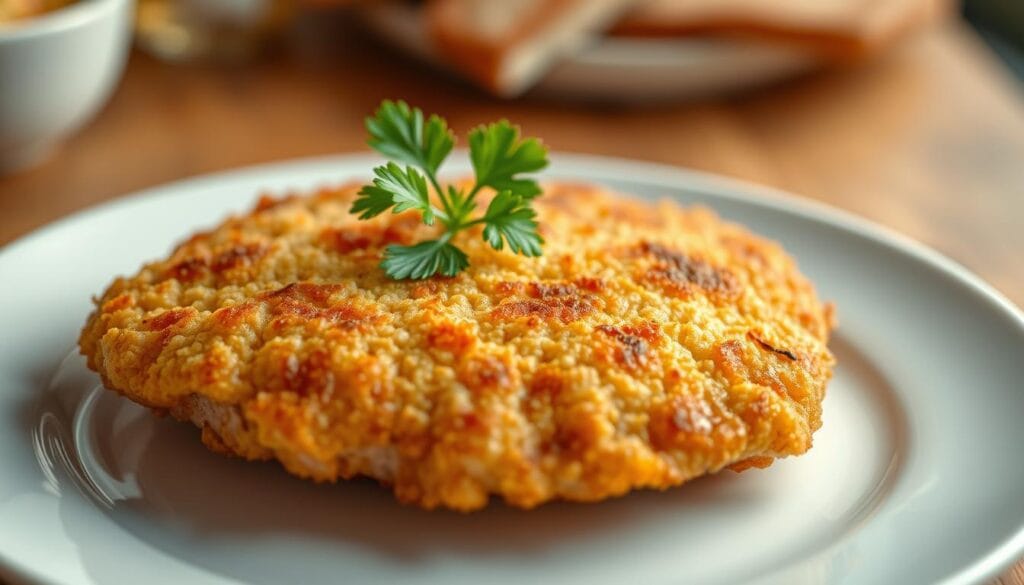
Want to make your homemade pork schnitzel taste like it’s from a restaurant? It’s all about the details and a few secret techniques. These tips will help you get that perfect crispiness.
The Secret to the Perfect Crust
For a perfectly crispy crust, focus on your breading. Set up a station with flour, eggs, and breadcrumbs. Using Panko breadcrumbs is a game-changer. They make the crust lighter and crisper.
Press the breadcrumbs onto the meat gently. This ensures they stick well.
Temperature and Timing Techniques
When frying crispy pork schnitzel, temperature is key. Your oil needs to be very hot before adding the pork chops. If it’s not hot enough, they’ll become soggy.
Test the oil by adding a small piece of Panko. If it sizzles, it’s ready. Fry the schnitzel for 2-3 minutes on each side until it’s golden brown. A thermometer helps keep the oil at the perfect temperature for the best pork schnitzel.
Troubleshooting Common Pork Schnitzel Problems
Making perfect pork schnitzel can be tough, but knowing common problems helps. Even with a great recipe, things can still go wrong. But, knowing how to fix these issues will make your schnitzel delicious every time.
Why Your Breading Might Fall Off
If your breading falls off, it might be because of wrong coating or too much moisture. To fix this, dry your pork cutlets before coating. Also, don’t overcrowd the pan; cook in batches if needed. Proper coating and gentle handling are key.
- Pat dry the pork cutlets before coating
- Avoid overcrowding the pan
- Use the right breading technique
Fixing Undercooked or Overcooked Schnitzel
Cooking pork schnitzel right is very important. If it’s undercooked, it’s not safe to eat. If it’s overcooked, it gets dry. Use a thermometer to check for an internal temperature of 145°F (63°C).
If your schnitzel is undercooked, keep frying until it’s right. For overcooked schnitzel, adjust your cooking time or temperature.
Salvaging Soggy Schnitzel
Soggy schnitzel usually comes from wrong frying methods. To fix it, try reheating in the oven at a low temperature. Or, refry it briefly to make it crispy again. Make sure the oil is at the right temperature before frying.
By tackling these common problems, you’ll make authentic pork schnitzel that’s tasty and satisfying.
Delicious Variations of Traditional Pork Schnitzel
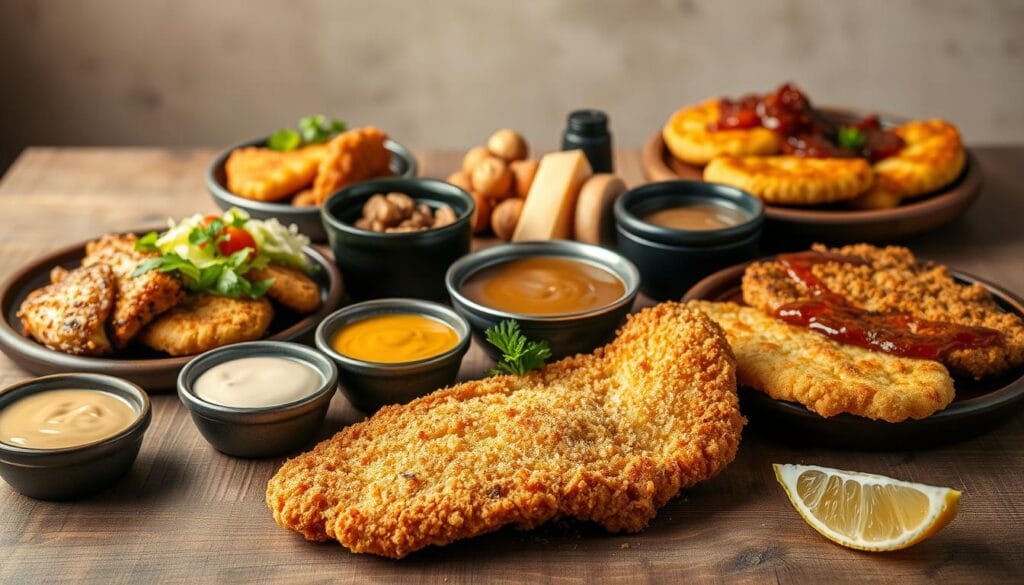
The classic pork schnitzel recipe can be turned into many tasty variations. These offer a wide range of flavors and culinary experiences. You can try different regional specialties, international adaptations, and modern twists to make your cooking better.
Regional German and Austrian Variations
In Germany and Austria, pork schnitzel is a beloved dish with many regional twists. For example, “Jägerschnitzel” or hunter’s schnitzel comes with a rich mushroom gravy. On the other hand, “Weinerschnitzel” is a Viennese version often served with a slice of lemon. You can also add a creamy mustard sauce or tartar sauce for extra taste.
- Jägerschnitzel with mushroom gravy
- Weinerschnitzel with lemon
- Creamy mustard sauce variation
International Schnitzel Adaptations
Pork schnitzel has been adopted by cuisines worldwide, leading to unique adaptations. In Japan, it’s called “tonkatsu,” often served with shredded cabbage and a tangy sauce. In Italy, “cotoletta” is a similar dish, breaded and fried to perfection. You can mix these international flavors to create your own fusion dishes.
Creative Modern Twists
To give traditional pork schnitzel a modern twist, try different coatings or flavorings. You can use panko breadcrumbs for a lighter crust, add herbs and spices to the breading, or use chicken or veal instead. Also, experiment with various sauces and sides to make a unique dining experience.
- Use panko breadcrumbs for a lighter coating
- Add herbs and spices to the breading for extra flavor
- Experiment with different proteins like chicken or veal
Perfect Side Dishes and Accompaniments
Choosing the right side dishes can make your pork schnitzel meal even better. It’s important to pick sides that go well with the schnitzel’s crispy, savory taste. You want to enhance the flavor without overpowering it.
Traditional German Sides
Traditional German sides are a perfect match for pork schnitzel. Try serving it with red-skinned potato salad or buttery mashed potatoes. These options are loved for a reason. The earthy taste of potatoes complements the schnitzel’s rich flavor.
Braised red cabbage is another classic choice. It adds a sweet and sour touch to the meal. For a lighter option, boiled or steamed veggies like green beans or carrots can add freshness to your plate.
Fresh Salads and Vegetables
Fresh salads and veggies offer a nice contrast to the rich schnitzel. A simple mixed greens salad with a light vinaigrette is a great choice. You can also try a warm potato salad or a cucumber salad with yogurt and dill.
Sauces and Condiments
Sauces and condiments are key for pork schnitzel. While some like a squeeze of fresh lemon, others prefer jäger sauce or a tangy apple cider vinegar sauce. Spicy mustard is also a classic German condiment that adds a nice kick.
By carefully choosing your side dishes and accompaniments, you can make a complete and satisfying meal. It will highlight your homemade pork schnitzel beautifully.
Conclusion: Mastering the Art of Homemade Pork Schnitzel
With this easy pork schnitzel recipe, you’re on your way to making delicious homemade pork schnitzel. It’s sure to impress anyone. The secret to crispy pork schnitzel is in the preparation and technique.
Following the steps in this article will help you make perfect schnitzel every time. Remember, practice makes perfect. If your first attempts don’t turn out right, don’t worry.
As you keep making homemade pork schnitzel, you’ll get better and more confident. You can try new things and experiment with different ingredients. This recipe is great for any occasion, whether it’s just for you or for a big group.
Now that you know the basics, it’s time to get creative. Try new flavors and ingredients. With your skills, you can make all sorts of tasty dishes, from traditional German schnitzel to modern twists. Happy cooking!