
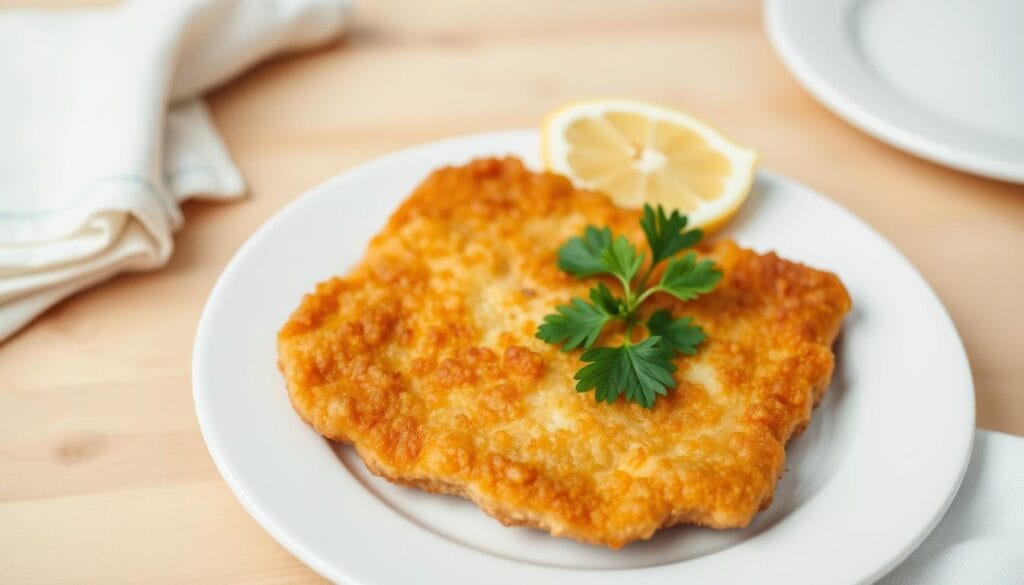
Imagine biting into a tender, golden-brown cutlet. It’s breaded perfectly and fried to a crispy delight. This classic dish is simpler to make than you think. With a few straightforward steps, you can enjoy an authentic schnitzel experience at home.
The traditional german schnitzel is more than just a meal; it’s a culinary journey. It comes from Austria and Germany, passed down through generations. By following this guide, you’ll be able to recreate this timeless dish, bringing a taste of Europe to your table.
Table of Contents
The History and Cultural Significance of German Schnitzel
Many think schnitzel comes from Germany, but its true start is a topic of debate. This dish, known for its breaded and fried cutlet, has a history that crosses many European cultures. Learning about schnitzel’s evolution helps us see its importance in German food.
Origins of Schnitzel in German Cuisine
Some say schnitzel started in Austria, but others think it might have come from Eastern Europe. Food historians point out that schnitzel’s true beginnings are unclear. Yet, it’s a big part of German food culture.
It’s believed that schnitzel came to Germany through cultural sharing and people moving. Over time, Germans made their own versions, with different tastes and ingredients.
Several things helped schnitzel become popular in Germany:
- Pork and veal were easy to find, making them top choices for schnitzel
- Austrian and Eastern European cooking styles influenced German dishes
- Schnitzel’s flexibility allowed for many toppings and sauces
Regional Variations Across Germany
In Germany, schnitzel changes a lot from one place to another. In Germany, schnitzel is often served with toppings or sauces, showing off local flavors and ingredients. For example:
| Region | Variation | Description |
|---|---|---|
| Bavaria | Jägerschnitzel | Served with a mushroom sauce |
| North Rhine-Westphalia | Rahmschnitzel | Topped with a creamy sauce |
These different versions show how rich and varied German schnitzel is. It’s a favorite dish all over the country.
What Makes an Authentic German Schnitzel Recipe
German schnitzel is loved all over the world. It has certain traits that make it authentic. Knowing its traditional ingredients and common mistakes is key.
Traditional Ingredients
To make a real schnitzel, pound the meat thin. Pork is the most popular choice, known as Schweineschnitzel. Choosing the right meat is vital for a homemade schnitzel.
The traditional ingredients are:
- Pork cutlets
- All-purpose flour
- Eggs
- Breadcrumbs
- Butter or oil for frying
These ingredients are key to an easy schnitzel recipe that tastes like the real thing.
Common Misconceptions About German Schnitzel
Many think schnitzel can be made with any meat. But, it’s traditionally pork or veal. Also, the breading should be light for a crispy outside.
Common errors to steer clear of include:
- Using too much breading
- Not pounding the meat thin enough
- Frying at the wrong temperature
Avoiding these mistakes helps you make an authentic schnitzel recipe. It’s delicious and stays true to its German origins.
Essential Ingredients for Perfect German Schnitzel
To make an authentic German schnitzel, picking the right ingredients is key. The quality and type of ingredients greatly affect the taste and texture of the dish.
Selecting the Right Cut of Meat
The meat is the base of a great schnitzel. You can choose from different cuts, based on what you like and local traditions.
Pork vs. Veal Options
German schnitzel can be made with pork or veal. Pork schnitzel is more common in Germany and tastes richer because of its fat. Veal is leaner and tender. Your choice depends on your taste and the recipe you’re using.
Meat Thickness and Quality
Whether you pick pork or veal, the meat’s thickness and quality matter. It should be about 1/4 inch thick. If it’s thicker, pound it to make it thinner. Choose meat that’s fresh and has a good texture. Some people like using boneless pork chops or tenderloins for their schnitzel.
Breading Components
The breading makes schnitzel crispy. It includes flour, egg, and breadcrumbs.
Flour Selection
Start by coating the meat in flour. All-purpose flour works best. It helps the egg stick to the meat better.
Egg Preparation
Use beaten eggs as the second layer. Make sure they’re fresh and well-beaten for an even coat.
Breadcrumb Types
The last layer is breadcrumbs. Panko bread crumbs are best for a light, crispy coating. Regular breadcrumbs will give a denser coating.
| Breadcrumb Type | Texture | Result |
|---|---|---|
| Panko | Light and Airy | Crispy Coating |
| Regular | Dense | Slightly Thicker Coating |
Oil Selection for Frying
Choosing the right oil for frying is key for a crispy schnitzel. Use an oil with a high smoke point to fry without burning. Canola or vegetable oil is good because they have a neutral flavor and high smoke points.
By picking the right meat, preparing the breading, and choosing the right oil, you’ll make a best schnitzel recipe that’s both authentic and tasty.
Equipment You’ll Need
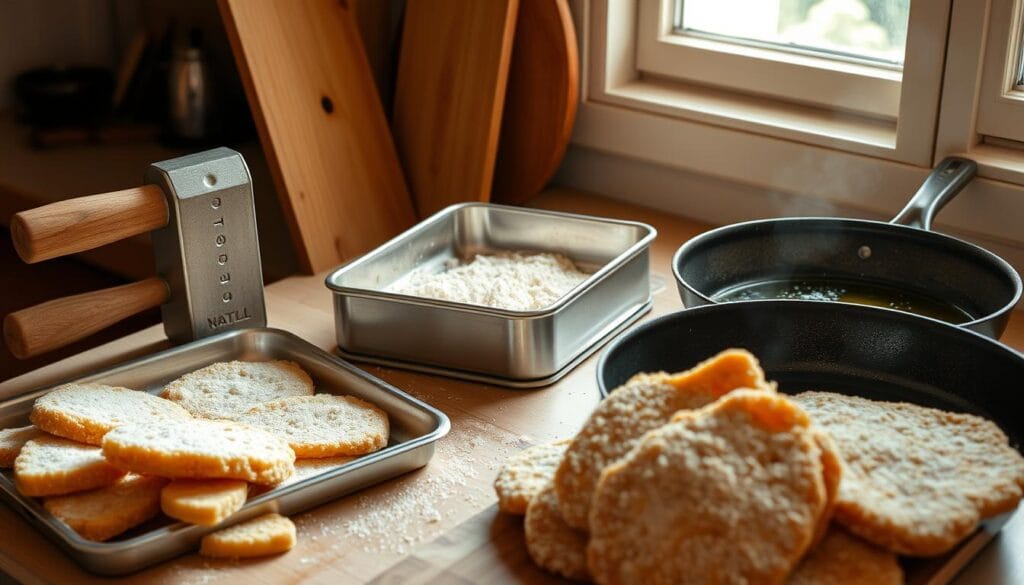
To make a real German schnitzel, you need certain kitchen tools. The right equipment makes preparing it easier and ensures a tasty dish.
Essential Kitchen Tools
Here are the key tools for a classic schnitzel. They help tenderize the meat and get the coating just right.
Meat Mallet or Tenderizer
A meat tenderizer or wooden mallet is key. It pounds the meat to the right thickness. This makes sure your schnitzel cooks evenly and is tender.
Frying Pans and Thermometers
A heavy-bottom skillet or an electric skillet is best for frying. It keeps the heat even. A thermometer is crucial for the right oil temperature. This makes the outside crispy without overcooking the meat.
Optional Equipment for Better Results
Some extra tools can make your schnitzel even better. A splatter guard keeps your stovetop clean. A wire rack helps drain oil, keeping the schnitzel crispy.
With these tools, you’re ready to make a delicious schnitzel. It’s sure to impress everyone.
Step-by-Step German Schnitzel Recipe
To make authentic German schnitzel, follow a precise process. This ensures a crispy outside and a tender inside. We’ll guide you through preparing the meat, creating the perfect breading, and frying techniques for crispy results.
Preparing the Meat
Preparing the meat is key in making German schnitzel. It involves tenderizing and seasoning the cutlets. This step is crucial for the right texture and flavor.
Tenderizing Techniques
To make the schnitzel tender and juicy, don’t slice the meat too thin. Instead, use a meat tenderizer to pound it down. Use a meat mallet to gently pound the cutlets between sheets of plastic wrap or parchment paper until they are evenly thin. This tenderizes the meat and ensures even thickness for even cooking.
Seasoning the Meat
After tenderizing, season the cutlets. Lightly sprinkle both sides with salt and pepper. You can add other seasonings if you like, but traditional German schnitzel is simple.
Creating the Perfect Breading
A good breading is essential for a crispy exterior. The key is in the three-station setup and proper coating technique.
The Three-Station Setup
Set up three shallow dishes: one with flour, one with beaten eggs, and one with breadcrumbs. This three-station setup is crucial for achieving a well-coated schnitzel.
Proper Coating Technique
Dredge the seasoned cutlet in flour, shaking off excess. Then, dip it in the beaten eggs, ensuring it’s fully coated. Finally, coat it in breadcrumbs, pressing gently to adhere. Make sure the cutlet is evenly coated at each stage for the best results.
Frying Techniques for Crispy Results
Frying turns your breaded cutlet into a crispy, golden schnitzel.
Oil Temperature Management
Heat about 1/2 inch of oil in a heavy skillet to around 325 degrees Fahrenheit. Maintaining the correct oil temperature is crucial for achieving a crispy exterior without burning the breading. Use a thermometer to monitor the temperature and adjust the heat as necessary.
Proper Frying Time
Fry the schnitzel for about 2-3 minutes on each side, or until it reaches a golden brown. Don’t overcrowd the skillet; fry in batches if necessary. This ensures each piece cooks evenly.
How to Know When Your Schnitzel is Done
The schnitzel is done when it’s golden brown and crispy on the outside, and the meat is cooked through. You can check for doneness by cutting into one of the cutlets; it should be white and juicy inside. A good schnitzel should also have a satisfying crunch when you bite into it.
| Step | Description | Tips |
|---|---|---|
| 1. Tenderizing | Pound cutlets to even thickness | Use a meat mallet between plastic wrap |
| 2. Seasoning | Sprinkle with salt and pepper | Keep it simple for traditional flavor |
| 3. Breading | Dredge in flour, egg, then breadcrumbs | Press breadcrumbs gently to adhere |
| 4. Frying | Fry at 325°F for 2-3 minutes per side | Use a thermometer to maintain temperature |
“The secret to a great schnitzel is in the details – from tenderizing the meat to achieving the perfect crispiness through careful frying.”
Common Mistakes to Avoid When Making Schnitzel
To make the best schnitzel, it’s important to avoid certain mistakes. These errors can affect the taste, texture, and quality of your dish. Knowing the common pitfalls can help you make schnitzel easily.
Breading Pitfalls
The breading process is key in making schnitzel. However, several mistakes can happen during this step. Two common problems are wet breading and breading not sticking well.
Wet Breading Issues
One common mistake is having wet breading. Not shaking off excess breading can make your schnitzel greasy. This happens because excess moisture absorbs more oil. To fix this, gently shake off any extra breading before frying.
Breading Adhesion Problems
Another issue is when the breading doesn’t stick to the meat. If this happens, the breading can fall off while frying. To avoid this, make sure the meat is ready and the breading is applied correctly.
Temperature Control Issues
Temperature control is crucial when frying schnitzel. Wrong oil temperatures can make the schnitzel undercooked or overcooked. There are two main temperature issues to watch out for.
Oil Too Hot or Too Cold
If the oil is too hot, the breading can burn before the meat is cooked. If it’s too cold, the schnitzel will soak up too much oil. The best frying temperature is between 350°F and 375°F.
Inconsistent Cooking
Inconsistent cooking can happen if the oil temperature changes during frying. To keep the temperature steady, don’t overcrowd the pan and adjust the heat as needed.
Post-Cooking Errors
Even after cooking, there are mistakes to avoid. One common error is not draining the schnitzel properly. If you don’t place it on a paper towel-lined plate, it can become soggy from excess oil.
By avoiding these common mistakes, you can make schnitzel that’s crispy, flavorful, and enjoyable. Following these tips will help you create a classic schnitzel recipe that will impress everyone.
Traditional and Modern Serving Suggestions
Schnitzel in Germany is often served with various toppings and sauces. This enhances its flavor. The traditional way to serve schnitzel includes classic German side dishes. These dishes complement its crispy exterior and tender interior.
Classic German Side Dishes
Traditional German sides are key to an authentic schnitzel experience. These sides are usually potato-based or made from traditional vegetables.
Potato-Based Sides
Potato salad, boiled potatoes, or kartoffelpuffer (potato pancakes) are favorites. These dishes are hearty and go well with the crispy schnitzel.
Traditional Vegetables
Common vegetables include braised red cabbage, sautéed spinach, or steamed green beans. These add a fresh contrast to the rich schnitzel.
Sauce Pairings
The right sauce can make your schnitzel experience better. Traditional options include a simple lemon garnish or more complex specialty sauces.
Lemon Garnish
A squeeze of fresh lemon juice is a classic choice. It adds brightness to your schnitzel.
Specialty Sauces
Sauces like Jägersoße (hunter’s sauce) or creamy mushroom sauce add depth. These sauces are made with mushrooms, onions, and sometimes cream.
| Side Dish | Description | Pairing Suggestion |
|---|---|---|
| Potato Salad | A creamy salad made with boiled potatoes, onions, and herbs. | Pairs well with pork schnitzel recipe. |
| Braised Red Cabbage | Cabbage cooked with apples and spices. | Complements traditional German schnitzel nicely. |
| Steamed Green Beans | Fresh green beans steamed to perfection. | A light side that goes well with crispy schnitzel. |
Contemporary Serving Ideas
For a modern twist, try serving schnitzel with sides like quinoa salad or roasted vegetables. You can also experiment with different breading ingredients or flavors. This gives your schnitzel a unique taste.
Popular Variations of the Traditional German Schnitzel Recipe
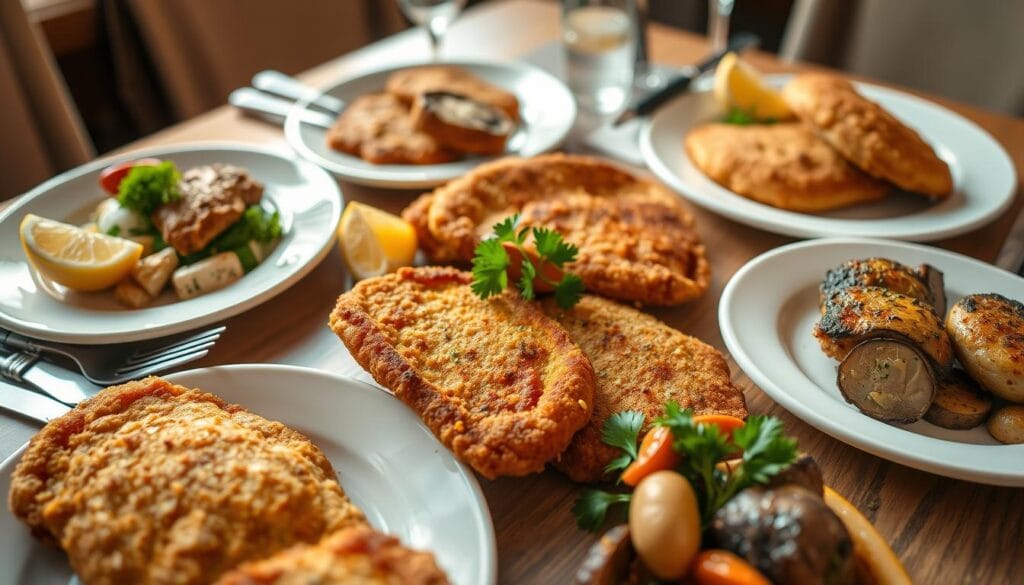
German schnitzel recipes have evolved over time. From Jägerschnitzel to Wiener Schnitzel, each region has its own twist. The traditional recipe has been a favorite for centuries.
There are many schnitzel variations, each with its own taste. You can try Jägerschnitzel, Rahmschnitzel, Zigeunerschnitzel, and Wiener Schnitzel, inspired by Austria.
Jägerschnitzel (Hunter’s Schnitzel)
Jägerschnitzel is topped with a rich mushroom gravy. It’s made with button and cremini mushrooms, onions, and sometimes bacon. This topping adds a deep flavor that pairs well with the crispy schnitzel.
Rahmschnitzel (Cream Schnitzel)
Rahmschnitzel is served with a creamy sauce. The sauce is made with heavy cream, mushrooms, and paprika. It’s loved for its rich and indulgent taste.
Zigeunerschnitzel (Gypsy Schnitzel)
Zigeunerschnitzel is spicy, with a sauce of bell peppers, onions, and tomatoes. It’s great for those who like a little heat in their meals.
Wiener Schnitzel (Austrian Variation)
Wiener Schnitzel comes from Austria and uses veal. It’s breaded and fried, served with a slice of lemon. This classic version is a favorite among schnitzel fans.
| Variation | Description | Key Ingredients |
|---|---|---|
| Jägerschnitzel | Hunter’s Schnitzel with mushroom gravy | Mushrooms, onions, bacon |
| Rahmschnitzel | Cream Schnitzel with a rich creamy sauce | Heavy cream, mushrooms, paprika |
| Zigeunerschnitzel | Gypsy Schnitzel with a spicy pepper sauce | Bell peppers, onions, tomatoes |
| Wiener Schnitzel | Austrian veal schnitzel | Veal, breadcrumbs, lemon |
These variations show how versatile the traditional German schnitzel recipe is. Whether you like creamy Rahmschnitzel or spicy Zigeunerschnitzel, there’s a version for everyone.
Conclusion
Anyone can learn to make German schnitzel with practice. By following the classic recipe in this article, you now know how to make a real German dish. It’s sure to impress everyone.
The secret to great homemade schnitzel is in the prep and details. Choose the right meat, and get the breading and frying just right.
Now you know the basics of a traditional German schnitzel recipe. Try making Jägerschnitzel or Rahmschnitzel to add your own twist. As you get better, you’ll make schnitzel that’s a favorite in your kitchen.
Use the tips and techniques from this article to make delicious German schnitzel. It will impress your family and friends. So, start cooking and enjoy learning this classic recipe.