
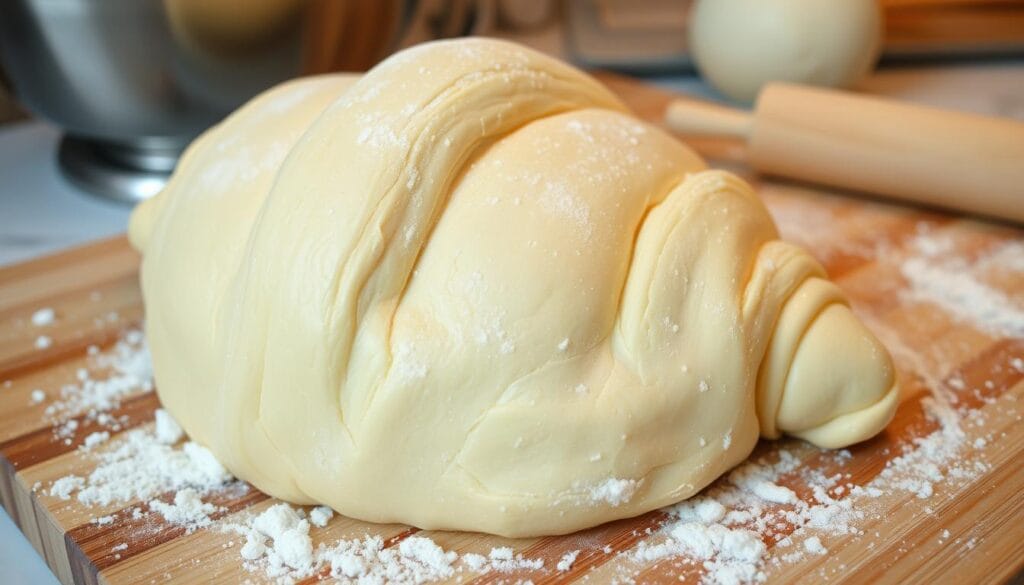
Imagine starting your day with the flaky, buttery goodness of a freshly baked croissant, right in your home. This simple guide lets you make your own delicious treats in your kitchen.
Making croissants from scratch might seem hard, but it’s actually easy. Just follow a simple croissant dough recipe to enjoy the rich flavors and tender layers of these beloved pastries.
You’ll find the process easy to follow, and the result will be worth it. Get ready to wow your family and friends with your baking skills.
Table of Contents
The History and Origins of Croissants
Did you know that croissants, a classic French pastry, started in Austria? It all began in the 17th century with the “Kipferl,” a crescent-shaped pastry made in Vienna. This was a response to the Ottoman Empire’s siege. Later, Austrian princess Marie Antoinette brought it to France, where she married King Louis XVI.
From Austria to France: The Croissant’s Journey
The Kipferl became a hit in France, evolving into the croissant we love today. French bakers perfected the recipe, making a dough that’s flaky and buttery. By the 19th century, croissants were a must-have in French bakeries. The secret to their layers is the lamination process, folding dough over butter.
Evolution of the Modern Croissant
Today, croissants have changed a lot. Bakers now fill them with chocolate, almond, and more. Yet, the classic croissant is still loved for its simplicity and taste. Food historian
“The croissant is a perfect example of how a traditional pastry can be both preserved and reinvented.”
Now, making homemade croissant dough is easier than ever. You can enjoy this French favorite right in your own home.
| Year | Event | Location |
|---|---|---|
| 17th Century | Kipferl Creation | Vienna, Austria |
| 19th Century | Croissant Popularity | France |
Why Homemade Croissants Are Worth the Effort
Making homemade croissants is more than just baking. It’s about creating a tasty experience. You get to pick the ingredients and control the quality. This is a big plus over store-bought croissants.
Flavor and Freshness Benefits
Homemade croissants taste better and are fresher than store-bought ones. Baking them at home means you can enjoy them at their best. The flaky layers and buttery aroma of fresh croissants are unmatched.
Cost Savings of Making Your Own
Homemade croissants can also save you money. Although buying quality ingredients costs upfront, baking in bulk saves money. You can enjoy your favorite flaky croissant dough without spending too much.
Essential Ingredients for the Perfect Croissant Dough
Making the perfect croissant dough starts with the right ingredients. The quality of your croissants depends on what you choose. So, picking the best ingredients is key.
Flour Selection and Quality
The flour you pick is very important. You need flour that is strong yet tender.
All-Purpose vs. Bread Flour
All-purpose flour works, but bread flour is better for croissants. It has more protein, which makes the dough stronger.
Protein Content Considerations
The protein in flour is crucial. It affects how elastic and strong the dough is. Aim for a protein level of 12% to 14% for croissants.
The Importance of European-Style Butter
European-style butter is key for flaky, tender croissants. It adds a richer flavor and better texture.
Other Key Ingredients
Ingredients like flour and butter are important, but others matter too.
Yeast Options
You can use active dry yeast or instant yeast. Instant yeast is easier to use and works faster.
Salt, Sugar, and Milk
Salt adds flavor, sugar gives sweetness, and milk makes the dough richer. Using good milk improves the taste.
Focus on these ingredients to make a buttery croissant dough. You’ll get a classic croissant with flaky layers and rich taste.
Equipment You’ll Need
To start making croissants, you’ll need some basic equipment. Quick croissant dough making requires specific tools. These tools make the process easier and the dough more delicious.
Basic Tools for Beginners
Beginners need these basic tools for croissant making:
- Mixing bowls
- Measuring cups and spoons
- Dough scraper
- Pastry brush
- Baking sheet
These tools are essential for the first steps of making your dough.
Optional Equipment for Advanced Bakers
Advanced bakers might want to get these optional tools:
| Equipment | Use |
|---|---|
| Stand mixer | Helps with dough mixing and laminating |
| Pastry marble | Provides a cool surface for rolling out dough |
| Croissant proofing basket | Aids in shaping and proofing croissants |
Understanding Lamination: The Key to Flaky Layers
Lamination is what makes a croissant truly special. It’s the process of layering dough and butter to get that flaky, tender texture. This technique is key to a successful authentic croissant dough recipe.
The Science Behind Croissant Layers
Lamination involves folding and rolling out the dough many times. This creates layers of butter and dough. When the croissant bakes, the butter’s water turns to steam, separating the layers.
This makes the croissant flaky. The science behind it is how the dough’s gluten works with the butter’s fat. This delicate balance is crucial for the perfect texture.
Common Lamination Mistakes to Avoid
Even skilled bakers can run into lamination problems. Two big mistakes are temperature issues and wrong folding techniques.
Temperature Control Issues
Keeping the right temperature is vital during lamination. If the butter gets too warm, it melts into the dough, ruining the layers. If it’s too cold, it won’t roll out right.
It’s important to keep the fridge at a steady temperature. Also, watch the dough’s temperature during lamination.
Improper Folding Techniques
Wrong folding can cause uneven layers and a dense croissant. Make sure your folds are precise and the dough is rolled out evenly.
By understanding lamination and avoiding common mistakes, you can make great croissants. This will give you a delicious and beautiful product.
The Complete Croissant Dough Recipe
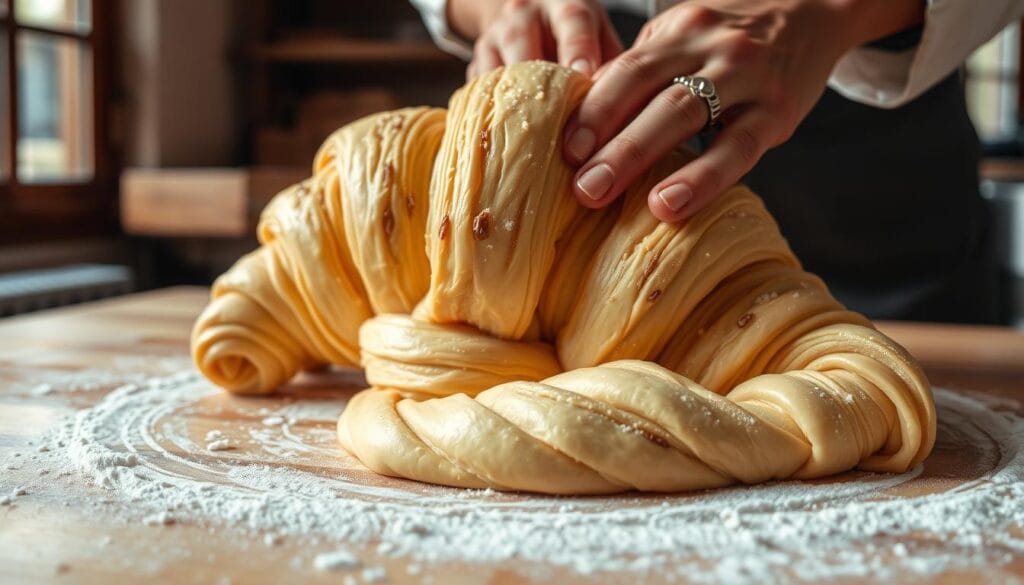
Making croissants from scratch is a rewarding journey. It starts with the right ingredients and techniques.
Ingredient Measurements and Preparation
You’ll need 1 1/2 cups warm milk, 1/4 cup sugar, and 2 teaspoons yeast. Also, 3 1/2 cups flour, 1 teaspoon salt, and 1/4 cup melted butter. Choose high-quality ingredients for the best taste. Mix the warm milk, sugar, and yeast in a bowl. Stir until the yeast dissolves, then wait 5-10 minutes for it to froth.
Making the Détrempe (Base Dough)
In a large bowl, mix flour, salt, and melted butter. Add the yeast mixture and mix until a shaggy dough forms. Knead the dough for 10 minutes until it’s smooth. Shape it into a ball and place it in a lightly oiled bowl. Cover it with plastic wrap and let it rise in a warm place for 1-2 hours.
Preparing the Butter Block
While the détrempe rises, soften 1 cup of European-style butter. Roll it out between parchment paper to a 1/2-inch thick rectangle. Keep the butter cold for easier rolling.
Initial Dough Rest
After the détrempe rises, punch it down and roll it out. Place the butter block on top, ensuring it’s centered. Fold the détrempe over the butter, like a letter. Let the dough rest in the fridge for at least 2 hours or overnight.
By following these steps, you’re on your way to making delicious homemade croissant dough. Remember to be patient and watch the dough’s temperature and texture.
Mastering the Lamination Process
Lamination is key in making croissants. It involves carefully layering dough and butter. To get flaky layers in your easy croissant dough, you must get this right.
First Turn: Enclosing the Butter
The first step is to put the butter block in the dough. Roll out the dough a bit bigger than the butter. Place the butter in the middle, making sure it’s not at the edges.
Then, fold the dough over the butter like a letter. Make sure the edges are sealed well. This stops the butter from leaking when you roll it out.
Second and Third Turns
After the first turn, turn the dough 90 degrees and roll it out again. Do this for the second and third turns. Each turn folds the dough to create layers of butter and dough.
This makes your croissants flaky. It’s important to keep the dough even and cold. This helps get the best croissant recipe results.
Final Rest Before Shaping
After the third turn, let the dough rest. This makes the dough easier to shape. Keep the dough cool to slow down yeast activity.
Mastering lamination helps you make delicious, flaky croissants. Remember, patience and precision are crucial for perfect layers in your easy croissant dough.
Time Management and Planning Your Croissant Bake
Making croissants from scratch needs patience and a good plan. To get the flaky croissant dough right, you must give the dough time to rest and laminate.
Day-by-Day Schedule Options
You can make croissants over a few days or in one day, based on your schedule. Here’s a 3-day plan:
| Day | Task |
|---|---|
| Day 1 | Make détrempe (base dough) |
| Day 2 | Laminate the dough |
| Day 3 | Shape and bake croissants |
This plan lets you work at a relaxed pace. It ensures your buttery croissant dough turns out great.
Making Croissants Fit Your Lifestyle
No matter your week or weekend, you can adjust croissant-making to fit your life. For a quicker option, start early in the morning and bake by afternoon.
Shaping Techniques for Classic Croissants
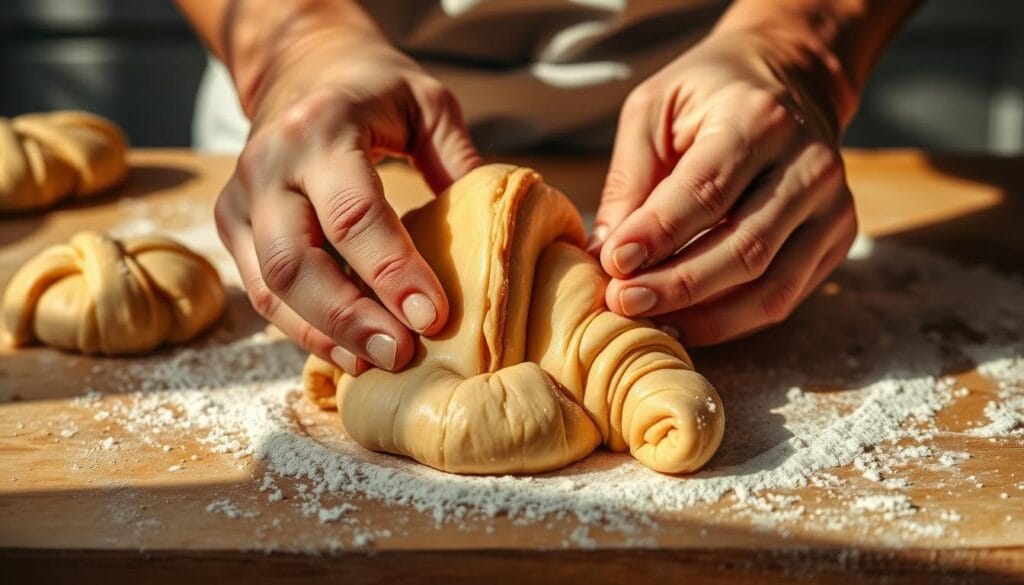
Shaping your croissant dough is where the magic happens. It turns into the flaky, buttery pastry we all love. To get it just right, you need to learn the right shaping technique. This can be the traditional crescent shape or the straight, Parisian style.
Traditional Crescent Shape Method
The traditional crescent shape is a classic look for croissants. To get this, you’ll need to cut and roll your dough carefully.
Cutting the Dough
Begin by cutting your dough into long, thin triangles. Precision is key here. Uniform triangles mean evenly baked croissants.
Rolling the Crescents
Roll each triangle into a crescent shape, starting from the wide end. Gently stretch the dough as you roll. This creates a smooth, even curve. Place the rolled croissants on a parchment-lined baking sheet, leaving enough space for them to expand during proofing.
Straight Croissants: The Parisian Style
The straight, or Parisian, croissant style is also popular. To shape straight croissants, roll the dough triangles in a straight line. This style is ideal for those who prefer a more rustic appearance or want to simplify the shaping process.
Mastering these shaping techniques will help you create beautiful, delicious croissants. Whether you choose the traditional crescent shape or the straight Parisian style, your classic croissant dough will shine.
Baking Your Croissants to Golden Perfection
To get your croissants golden, follow the right steps for proofing and baking. These stages bring your authentic croissant dough recipe to life.
Final Proofing Instructions
Before baking, your croissants need a final proofing. This step is key for their light and airy texture. Place them in a warm, draft-free spot, covered with plastic wrap or a damp towel.
The ideal temperature is between 75°F to 80°F (24°C to 27°C). Let them proof for 1 to 2 hours, or until they double in size.
Optimal Temperature and Timing
Preheat your oven to 400°F (200°C). Put the proofed croissants on a parchment-lined baking sheet, leaving 1 inch of space between each. Bake for 15 to 20 minutes, or until they’re golden brown.
Rotate the baking sheet halfway to ensure even browning.
Signs of Properly Baked Croissants
A well-baked croissant is golden brown and flaky. It should sound hollow when tapped gently on the bottom. Don’t overbake, as it can make them dry and lose their layers.
Troubleshooting Common Croissant Problems
Mastering croissant making means knowing how to fix common problems. Even with a great homemade croissant dough recipe, things can go wrong. Learning to solve these issues is essential for perfect croissants.
Butter Leakage Issues
Butter leakage is a common issue. It happens when the butter layer breaks through the dough. Make sure your butter is at the right temperature and consistency. If it’s too soft, it will ooze out.
Keep your ingredients cold to keep the layers intact.
| Cause | Solution |
|---|---|
| Soft butter | Refrigerate butter before use |
| Overworking dough | Minimize dough handling |
Dough Not Rising Properly
There are several reasons why your dough might not rise. Check the yeast’s expiration date. Also, make sure your dough is in a warm, draft-free place. Proper proofing is key for the right rise.
“The art of making croissants is all about layering and patience.” – French Baking Proverb
Fixing Dense or Tough Croissants
Dense or tough croissants usually come from overworking the dough. To fix this, fold and roll out your dough gently. This keeps the layers delicate. If your croissants are always dense, check your easier croissant dough recipe for changes.
By tackling these common problems, you can improve your croissant-making skills. You’ll make flaky, delicious pastries with your best croissant recipe.
Conclusion
Now you know how to make a buttery croissant dough. It’s time to try it out. With patience and practice, you’ll make a classic croissant dough that will wow everyone.
Creating perfect croissants means understanding lamination, choosing the right ingredients, and mastering shaping. This article has shown you how. You’ll soon make a flaky, delicious croissant dough that looks great too.
Keep improving your croissant-making skills. Remember, the secret to a great croissant is using high-quality ingredients and handling the dough with care. Soon, you’ll be enjoying homemade, buttery croissants.