
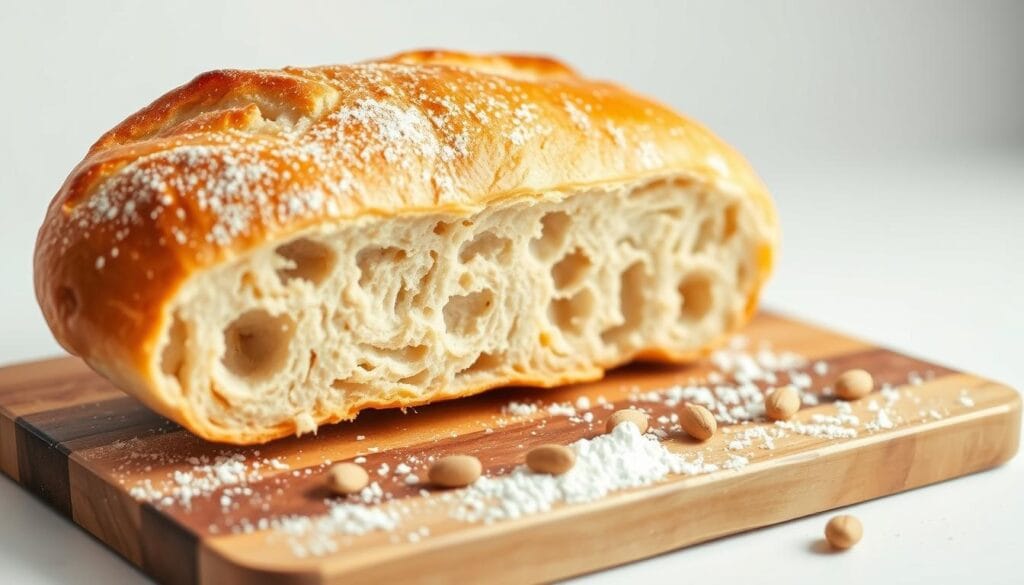
Imagine biting into a crispy, crunchy homemade bread. It has a chewy, light, and soft inside. The smell of freshly baked sourdough fills your kitchen, making you eager to taste it. This guide will help you make your own tasty sourdough baguette at home.
This easy sourdough baguette recipe is great for beginners. It needs just a few ingredients and simple steps. You’ll learn to mix, knead, and bake a perfectly crusty loaf.
Table of Contents
The Magic of Sourdough Baguettes
Making a classic sourdough baguette is both an art and a science. It involves growing a natural starter, learning about fermentation, and perfecting baking skills.
What Makes Sourdough Baguettes Special
Sourdough baguettes are special because of their unique taste and chewy texture. The natural fermentation process creates lactic acid. This gives sourdough its tangy flavor.
The Science Behind Sourdough Fermentation
The science of sourdough fermentation is interesting. Wild yeast and bacteria in the dough break down sugars and produce carbon dioxide. This process leavens the bread, adding to its flavor and texture.
Benefits of Homemade Sourdough
Homemade sourdough baguette bread has many advantages. You can choose the ingredients, avoiding additives and preservatives. Plus, it’s always fresh and can be tailored to your liking.
Understanding sourdough baguettes’ process and science lets you appreciate the skill involved. Whether you’re experienced or new, making classic sourdough baguette connects you to a long baking tradition.
Essential Ingredients for Perfect Baguettes
The key to a great sourdough baguette is its ingredients. To make a best sourdough baguette, each part must be of high quality.
Flour Selection and Quality
Choosing the right flour is vital for a sourdough baguette loaf. King Arthur Bread Flour with 12.7% protein was used for testing. This flour’s high gluten content makes the baguettes chewy.
“Using high-protein flour is essential for achieving the perfect crumb and crust,” say experienced bakers.
Water Temperature and Hydration Levels
Water temperature and hydration levels are key in sourdough baking. The water should be between 90°F and 100°F when mixing. A typical ratio is 70% water to flour.
Adjusting these can greatly change the final product.
Salt and Its Role
Salt adds flavor and controls yeast activity. Use high-quality salt like sea salt or kosher salt. It enhances the taste of your best sourdough baguette.
Creating and Maintaining Your Sourdough Starter
Creating and keeping a healthy sourdough starter is crucial. Mix flour and water and let it ferment. Regularly feed and check the starter’s activity.
A healthy starter is bubbly, has a tangy smell, and doubles in size after feeding.
By focusing on these ingredients and their roles, you’ll bake a perfect sourdough baguette loaf.
Equipment You’ll Need
The right tools can make baking sourdough baguettes more fun and efficient. You’ll need basic kitchen tools and some special baking gear to start.
Basic Kitchen Tools
First, make sure you have these basic tools:
- A large mixing bowl for dough preparation
- A measuring jug or cups for accurate liquid measurement
- A wooden spoon or dough whisk for mixing
- A baking scale is essential for accurate measurements
Specialized Baking Equipment
For baking sourdough baguettes, consider these special tools:
- A bread peel or parchment paper for transferring dough to the oven
- A bread steel or baking stone, which is recommended for achieving a crispy crust
- A Dutch oven or a steamy baking environment to create the perfect crust
Budget-Friendly Alternatives for Beginners
If you’re new to baking, you don’t have to spend a lot. Here are some affordable options:
- Use a regular baking sheet instead of a bread steel or stone
- Create a steamy environment by placing a pan of water in the oven
- Opt for a ceramic or glass bowl instead of a specialized dough container
With the right tools, you’ll be on your way to baking delicious sourdough baguettes. They’ll surely impress your family and friends.
Preparing Your Sourdough Starter
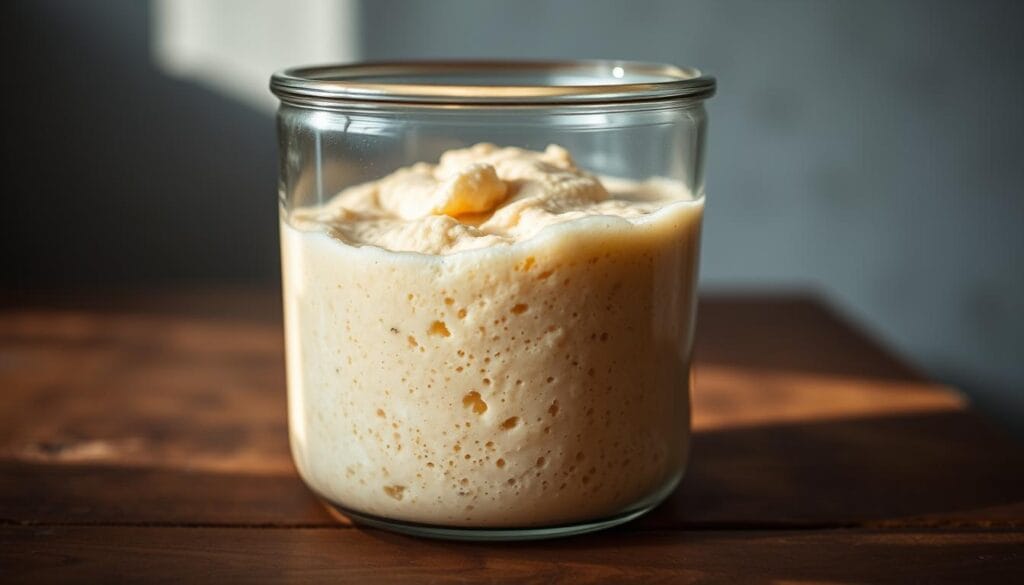
The journey to a delicious homemade sourdough baguette starts with a healthy sourdough starter. This natural yeast culture is key. It gives your bread its rise and unique flavor.
Creating a Starter from Scratch
To make a sourdough starter from scratch, mix equal parts flour and water in a clean container. Start with 50 grams of each. Cover it loosely and keep it warm and draft-free.
Feed your starter regularly. Discard half of it, then add fresh flour and water. Do this for a few days.
Signs of a Healthy, Active Starter
A healthy starter is bubbly, has a tangy smell, and grows nearly double in size after feeding. If it’s slow or smells bad, it might need more feedings or a better place.
Feeding Schedule Before Baking Day
Before baking, make sure your starter is active and strong. Mix 30 grams of ripe starter, 30 grams of flour, and 30 grams of water. This mix should double in 4-5 hours, showing it’s ready for baking.
Starter Consistency for Baguettes
For sourdough baguettes, your starter should be like thick pancake batter. If it’s too dry, it won’t ferment right. If it’s too wet, it might collapse during proofing.
By following these steps and keeping your starter healthy, you’re on your way to baking a tasty homemade sourdough baguette or an easy sourdough baguette.
The Complete Sourdough Baguette Recipe
Now that you have your sourdough starter ready, it’s time to dive into the complete sourdough baguette recipe. This guide will show you how to make delicious, crusty baguettes at home.
Day 1: Mixing and Autolyse
The first step is mixing the dough. Mix 500g of bread flour, 350g of water, and 150g of active sourdough starter in a large bowl. Just mix until combined, then cover and rest for 20-30 minutes for autolyse. This step hydrates the flour, making the dough easier to work with.
Day 1: Stretch and Fold Technique
After autolyse, add 10g of salt and mix until the dough starts to come together. Do stretch and folds every 30 minutes for 2 hours. This helps develop the dough’s gluten, giving your baguette its chewy texture.
Day 1-2: Bulk Fermentation
Keep the dough at room temperature (around 75°F to 78°F) for 4-5 hours, or until it expands by about 50%. Then, shape the dough into a rectangle, fold it, and put it in the refrigerator to slow down fermentation.
Day 2: Final Proof
The next day, take the dough out of the refrigerator and let it warm up. Shape the dough into your baguettes and place them on a lightly floured surface or proofing basket. Let the baguettes proof for about 2 hours, or until they double in size.
By following this sourdough baguette recipe, you’ll be on your way to creating beautiful, artisan sourdough baguettes that are sure to impress.
Shaping and Scoring Your Baguettes
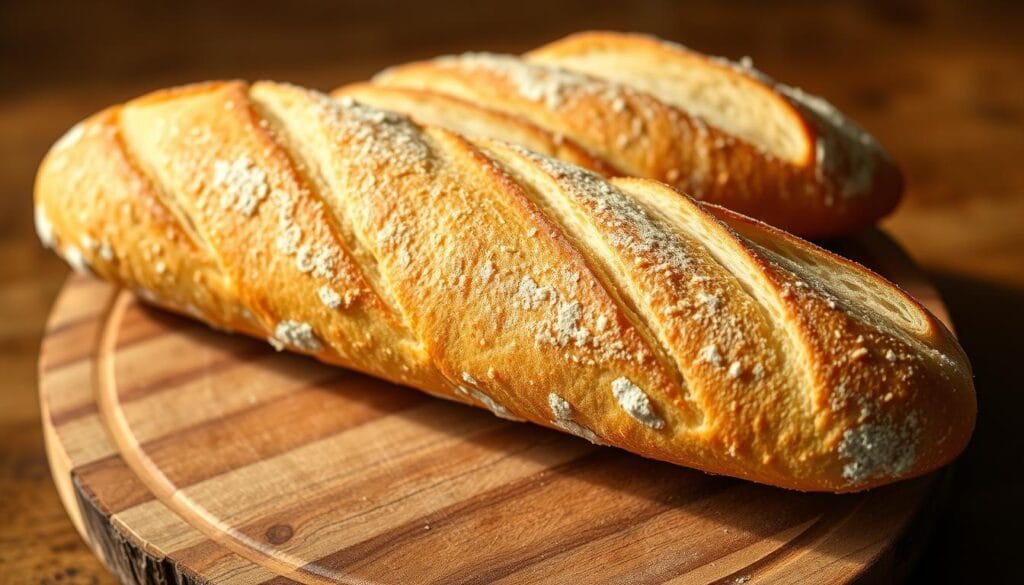
To get that perfect crust and crumb, you need to master shaping and scoring your sourdough baguettes. This step not only improves how your bread looks but also how it bakes.
Pre-shaping and Bench Rest
Start by shaping your dough into cylinders. This first step builds tension in the dough, which is key for the final shape. Then, let the dough rest on the bench for a bit. This bench rest relaxes the gluten, making it easier to shape the dough into its final form.
Creating the Classic Baguette Form
To turn your pre-formed cylinders into classic baguettes, gently stretch and fold the dough along its length. This method helps create the baguette’s long, thin shape. Make sure your hands are floured to avoid sticking.
Scoring Patterns for Beautiful Crusts
Scoring is an art that needs precision. Use a sharp blade to score your baguettes at a 45° angle. The number and depth of scores can change based on the pattern and crust texture you want. Usually, 3-4 scores are enough for a sourdough baguette bread.
Transferring to the Oven Without Deflating
To keep your baguettes’ shape and structure, transfer them to the oven on a peel or a baking sheet lightly dusted with cornmeal. This method reduces handling and prevents deflation. It helps your baguettes keep their airy inside and crusty outside.
| Shaping Technique | Description | Benefit |
|---|---|---|
| Pre-shaping | Forming dough into cylinders | Creates initial tension |
| Bench Rest | Allowing dough to rest | Relaxes gluten |
| Final Shaping | Stretching and folding dough | Achieves classic baguette form |
Baking Techniques for Crusty Sourdough Baguettes
To get a perfectly crusty sourdough baguette, you need to learn a few baking tricks. It’s not just about throwing the dough in the oven. It’s about making the right environment for your sourdough baguette loaf to get that perfect crust.
Preheating and Steam Creation Methods
First, preheat your oven. But don’t forget to create steam. Steam helps the crust form by slowing down its setting. This lets the crust expand more.
To make steam, preheat your oven to 450°F (232°C) with a cast-iron skillet inside. Just before baking, pour boiling water into the skillet. This simple trick can make your best sourdough baguette crust even better.
Temperature and Timing Guidelines
Temperature and timing are key when baking sourdough baguettes. A high temperature creates a crispy crust. The right timing ensures it’s cooked but not too hard.
Bake at 450°F (232°C) for 25-30 minutes as a starting point. But, this can change based on your oven and baguette size.
Using Dutch Ovens or Baking Stones
Using a Dutch oven or baking stone can improve your baking. A Dutch oven traps steam for a crispy crust. A preheated baking stone helps bake the loaf evenly.
If you don’t have these, a regular baking sheet works too. But, if you bake sourdough often, consider getting one of these tools.
Knowing When Your Baguettes Are Done
Figuring out when your sourdough baguettes are done can be tricky. Look for a deep golden crust and a hollow sound when you tap the bottom. These signs mean they’re fully cooked.
Remember, it takes practice to get it right. So, don’t get discouraged if it takes a few tries.
Troubleshooting Common Sourdough Baguette Problems
As you get better at making homemade sourdough baguette, you might face some common issues. These problems are normal and can be fixed with a few tweaks to your method.
Dealing with Flat or Dense Baguettes
If your baguettes are flat or dense, it could be because they didn’t proof enough. Try letting them proof for a longer, slower time. Also, make sure you’re using the right amount of steam while baking. This can greatly affect the crust and texture.
Fixing Gummy Interiors
A gummy interior means the bread wasn’t baked enough. Check your oven’s temperature and baking time. Letting the bread cool completely before slicing also helps prevent moisture from getting trapped.
Addressing Crust Issues
Crust problems, like a crust that’s too thick or dark, can be fixed. Try adjusting your oven’s temperature and baking time. Also, playing with steam levels during baking can change the crust’s texture and color.
Adjusting for Different Kitchen Environments
Your kitchen’s environment can really impact your sourdough baguette. Things like temperature, humidity, and altitude can change how the dough rises and the final texture. Be ready to tweak your recipe and techniques for your kitchen’s unique conditions to get the best results.
Conclusion: Enjoying Your Freshly Baked Sourdough Baguettes
Baking an easy sourdough baguette is a rewarding experience. You now have the recipe to make delicious, crusty baguettes at home.
For the best taste, eat your baguettes within a couple of days. If you can’t use them right away, freeze them. Just slice the baguette, put it in a freezer-safe bag, and store it in the freezer.
With the recipe and tips you’ve learned, you can enjoy a fresh baguette anytime. Try different toppings and fillings to enhance your baking experience.