

Imagine a dish that captures the warmth of Italian cuisine. Creamy parmesan risotto is a rich, velvety treat that always impresses.
This classic dish combines short-grain rice, savory broth, and nutty Parmesan cheese. It offers a sophisticated yet comforting flavor. Serving this creamy parmesan risotto to guests will surely make a memorable impression.
Table of Contents
The Rich History of Risotto
Risotto’s history is as rich and creamy as the dish itself, coming from Northern Italy. This beloved Italian dish has a storied past that has made it very popular.
Origins in Northern Italy
Risotto started in Northern Italy, in the regions of Piedmont and Lombardy. It was first made with Arborio rice, which is still key today. The name “risotto” means “little rice,” showing its humble start as a peasant food.
The early risotto was simple, with rice, broth, and local ingredients like veggies, herbs, and sometimes meat or fish. Over time, it grew more complex, with new ingredients and cooking methods.
Evolution into a Global Comfort Food
Italian immigrants took risotto with them around the world. It became popular globally, adapting to local tastes but keeping its core. Today, risotto is loved everywhere, in fancy restaurants and home kitchens.
Risotto’s journey to being a global comfort food is due to its flexibility and emotional appeal. It’s seen as warm, comforting, and a symbol of community, loved by many cultures.
| Region | Traditional Ingredients | Notable Variations |
|---|---|---|
| Piedmont | Arborio rice, white truffles | Risotto al Tartufo |
| Lombardy | Arborio rice, saffron | Risotto alla Milanese |
| Veneto | Seafood, vegetables | Risotto al Mare |
Understanding the Perfect Parmesan Risotto Recipe
To make the best parmesan risotto, you need to know a few things. First, understand what makes risotto special. Then, learn how Parmesan cheese plays a key role. Making easy parmesan risotto is all about mastering the creamy texture.
What Makes Risotto Unique
Risotto gets its creamy feel by slowly adding broth. This method coaxes starches from the rice, unlike heavy cream. Stirring constantly and adding liquid bit by bit is key. It makes the rice smooth and velvety.
By perfecting this technique, you can make a homemade parmesan risotto that’s as good as any restaurant’s.
The Importance of Parmesan in Authentic Risotto
Parmesan cheese is what makes risotto authentic. It adds a nutty, salty taste that makes the dish better. Using top-notch Parmesan is vital. It melts into the rice, boosting the flavor.
When you mix the right technique with quality Parmesan, you’re on your way to a best parmesan risotto. The secret is patience and focus. This way, your homemade parmesan risotto will be creamy and tasty.
Essential Ingredients for Creamy Parmesan Risotto
Making a creamy parmesan risotto starts with the best ingredients. The quality of your risotto depends on the ingredients you pick. We’ll look at the key ingredients for a classic parmesan risotto.
Selecting the Right Rice
The base of a great risotto is the rice. Use short-grain rice like Arborio, Carnaroli, or Vialone Nano. These types soak up liquid and release starch, making the risotto creamy.
Choosing Quality Parmesan Cheese
Parmesan cheese is key in a parmesan risotto. Choose aged Parmigiano-Reggiano for the best taste. Don’t use pre-grated cheese, as it may have additives.
Broth Options for Best Flavor
The broth is vital for creamy parmesan risotto. Use low-sodium chicken or vegetable broth. Pick a broth that’s flavorful but not too salty, as Parmesan cheese is also salty.
Supporting Ingredients
Other important ingredients are onions, garlic, white wine, and butter. They add depth and richness. You can also add mushrooms or asparagus for more flavor and nutrition.
| Ingredient | Description | Importance |
|---|---|---|
| Arborio Rice | Short-grain rice ideal for risotto | High |
| Parmesan Cheese | Aged Parmigiano-Reggiano for best flavor | High |
| Low-sodium Broth | Chicken or vegetable broth | High |
| Onions, Garlic | Adds depth to the risotto | Medium |
| White Wine | Enhances the flavor | Medium |
Tools and Equipment You’ll Need
To make a perfect risotto, you’ll need the right tools and equipment. Cooking risotto requires a specific set of cookware and utensils. These make the process easier and more efficient.
The Perfect Pot for Risotto
A large, high-sided sauté pan or Dutch oven is ideal for making risotto. This type of pot allows for even heat distribution. It also provides enough room to stir the rice constantly, which is crucial for achieving the creamy consistency characteristic of risotto.
Other Essential Utensils
In addition to the perfect pot, you’ll need a few other essential utensils. A wooden spoon or silicone spatula is necessary for stirring the risotto. You’ll also need a measuring cup for accurately measuring the broth and a fine grater for Parmesan cheese.
| Utensil | Purpose |
|---|---|
| Large, high-sided sauté pan or Dutch oven | Cooking risotto with even heat distribution |
| Wooden spoon or silicone spatula | Stirring risotto |
| Measuring cup | Accurately measuring broth |
| Fine grater | Grate Parmesan cheese |
Step-by-Step Classic Parmesan Risotto Recipe
Let’s dive into making a classic parmesan risotto. This guide will help you make a creamy, flavorful dish. It’s sure to become a favorite in your kitchen.
Preparing Your Mise en Place
Start by chopping one medium onion and two cloves of garlic finely. Grate 1 cup of Parmesan cheese and set it aside. Measure out 4 cups of broth for later. Having everything ready makes cooking easier and more fun.
Creating the Flavor Base with Aromatics
Heat 2 tablespoons of olive oil in a large saucepan over medium heat. Add the chopped onion and sauté until it’s translucent. This takes about 5 minutes. Then, add the minced garlic and cook for another minute, stirring constantly.
The Art of Toasting the Rice
Add 1 cup of Arborio rice to the saucepan. Stir to coat the rice in oil and mix with the onion and garlic. Cook for about 2 minutes, until the rice is lightly toasted.
Mastering the Stock Addition Process
Pour in 1/2 cup of white wine, stirring continuously until absorbed. Then, add the warmed broth, 1/2 cup at a time. Stir constantly and let each portion absorb before adding the next. This takes about 20-25 minutes, until the rice is cooked but still slightly firm.
Incorporating the Parmesan and Finishing Touches
Once the rice is cooked, remove the saucepan from the heat. Stir in the grated Parmesan cheese until melted. Add 1 tablespoon of butter and stir until fully incorporated. Season with salt to taste. Serve immediately, garnished with additional Parmesan cheese and fresh parsley if desired.
By following these steps, you’ll make a delicious classic parmesan risotto. Remember, the key is in the stirring and gradual stock addition. Be patient and enjoy the process.
Mastering the Technique: Tips for Perfect Risotto
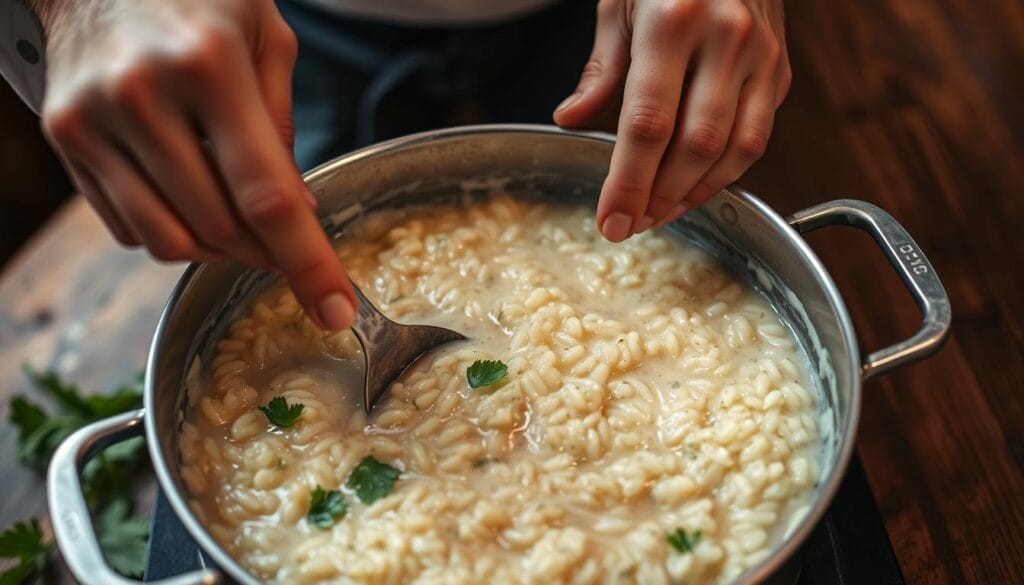
Making the perfect risotto is a journey. It’s about understanding the importance of stirring, consistency, and timing. We’ll explore key techniques to improve your risotto-making skills.
The Importance of Proper Stirring
Stirring is key to getting the creamy texture risotto is famous for. Constant stirring distributes heat evenly, ensuring the rice cooks right. It also releases starches, making the dish creamy. Use a gentle, continuous motion for the best results.
Achieving the Ideal Creamy Consistency
The perfect risotto is creamy but still slightly firm in the center. To get this, add broth slowly. This lets each portion absorb fully before adding more. This slow process brings out the rice’s natural starches, making it rich and creamy.
Timing Your Cooking Process
Timing is everything when cooking risotto. It should take about 20 to 30 minutes. Make sure you have enough time for this slow process. Rushing can make the risotto undercooked or overcooked, so be patient.
Testing for Doneness
To check if your risotto is done, do a simple test. Taste a few grains of rice. They should be creamy and tender but still have a bit of bite. If they’re too hard, keep cooking and testing. If they’re too soft, start over, as overcooked risotto is not good.
Delicious Variations of Easy Parmesan Risotto
Easy parmesan risotto is a great base for many tasty dishes. You can make it into something new by adding different ingredients and flavors.
Seasonal Vegetable Additions
Adding seasonal veggies is a simple way to change up your risotto. In spring, try asparagus and peas. Autumn brings roasted butternut squash. Chef Jamie Oliver says, “Use the freshest ingredients for a great risotto.”
Using seasonal produce makes your dish flavorful and exciting.
Protein-Enhanced Options
Adding protein makes your risotto more filling. Try grilled chicken, shrimp, or scallops. Vegetarians can enjoy roasted tofu or tempeh. A culinary expert notes, “The right protein makes risotto a main dish.”
Herb and Spice Variations
Herbs and spices can change your risotto’s taste. For a summer taste, add fresh basil and lemon zest. For a rustic flavor, use thyme and rosemary.
“The art of cooking is not just about following a recipe, it’s about understanding how different ingredients work together to create something new and exciting.”
Trying different herbs and spices lets you make unique risottos that you’ll love.
Dietary Adaptations
Risotto can be made for different diets. For a vegetarian risotto, use veggie stock and cheese. For gluten-free, choose gluten-free broth and cheese. You can even make a vegan version with nutritional yeast.
“Creativity in the kitchen is about making the most of what you have,” especially when adapting recipes.
Exploring these variations makes easy parmesan risotto a versatile dish. It’s perfect for many delicious meals.
Storing, Reheating and Repurposing Homemade Risotto
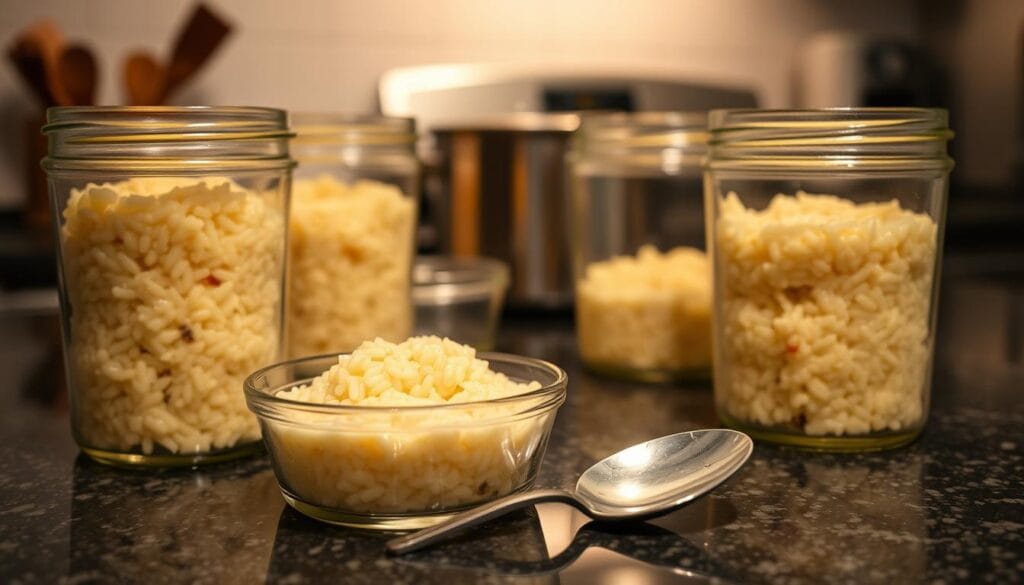
Risotto is a versatile dish that can be enjoyed fresh or saved for later. Proper storage and reheating techniques are crucial to maintain its quality. When you’ve invested time in making a delicious homemade risotto, you want to enjoy it to the last bite, even if that means saving some for later.
Proper Storage Techniques
To keep your risotto fresh, it’s essential to store it correctly. Refrigerate leftovers in an airtight container within two hours of cooking. Your risotto can be safely stored in the refrigerator for up to 5 days. When storing, make sure to cool the risotto to room temperature first to prevent bacterial growth.
Best Methods for Reheating
Reheating risotto requires a gentle approach to maintain its creamy texture. The best method is to reheat it on the stovetop over low heat, adding a bit more broth or water to loosen it to your desired consistency. Stir constantly to prevent the risotto from sticking to the pan. You can also reheat it in the microwave, but be sure to cover it and stir every 30 seconds until heated through.
Creative Leftover Transformations
Don’t be limited to just reheating your risotto; consider transforming it into a new dish. You can shape cold risotto into patties and pan-fry them until crispy and golden, creating risotto cakes. Alternatively, mix leftover risotto with some beaten eggs, form into balls, coat with breadcrumbs, and fry until crispy to make risotto fritters. These creative transformations can turn last night’s dinner into a new and exciting meal.
Pairing and Serving Your Best Parmesan Risotto
To enjoy your parmesan risotto, think about the perfect wine pairings and side dishes. These can make your meal better and more fun. A great pairing can make your dinner unforgettable.
Wine Pairing Suggestions
For wine with parmesan risotto, a dry white is best. Pinot Grigio and Gavi are top picks. They have a crisp taste that goes well with the creamy risotto.
If you want something stronger, try a light-bodied red wine. Pinot Noir is good, especially with mushrooms in your risotto.
Complementary Side Dishes and Garnishes
Pair your risotto with roasted or grilled veggies. Asparagus and brussels sprouts are great choices. They offer different tastes and textures.
Adding a simple green salad or garlic bread can also improve the meal. For garnishes, use fresh herbs like parsley or basil. They add color and freshness.
Conclusion: Enjoying Your Simple Yet Delicious Parmesan Risotto
Making parmesan risotto at home is easy and rewarding. You can now enjoy a delicious parmesan risotto, knowing you made it with care.
As you enjoy your simple parmesan risotto, try different variations to keep things exciting. Whether you stick to a classic recipe or explore new flavors, your homemade risotto will be a favorite.
Enjoying risotto is more than just the taste. It’s about the experience too. Take your time to enjoy the creamy texture and rich flavors that make it a comforting classic.